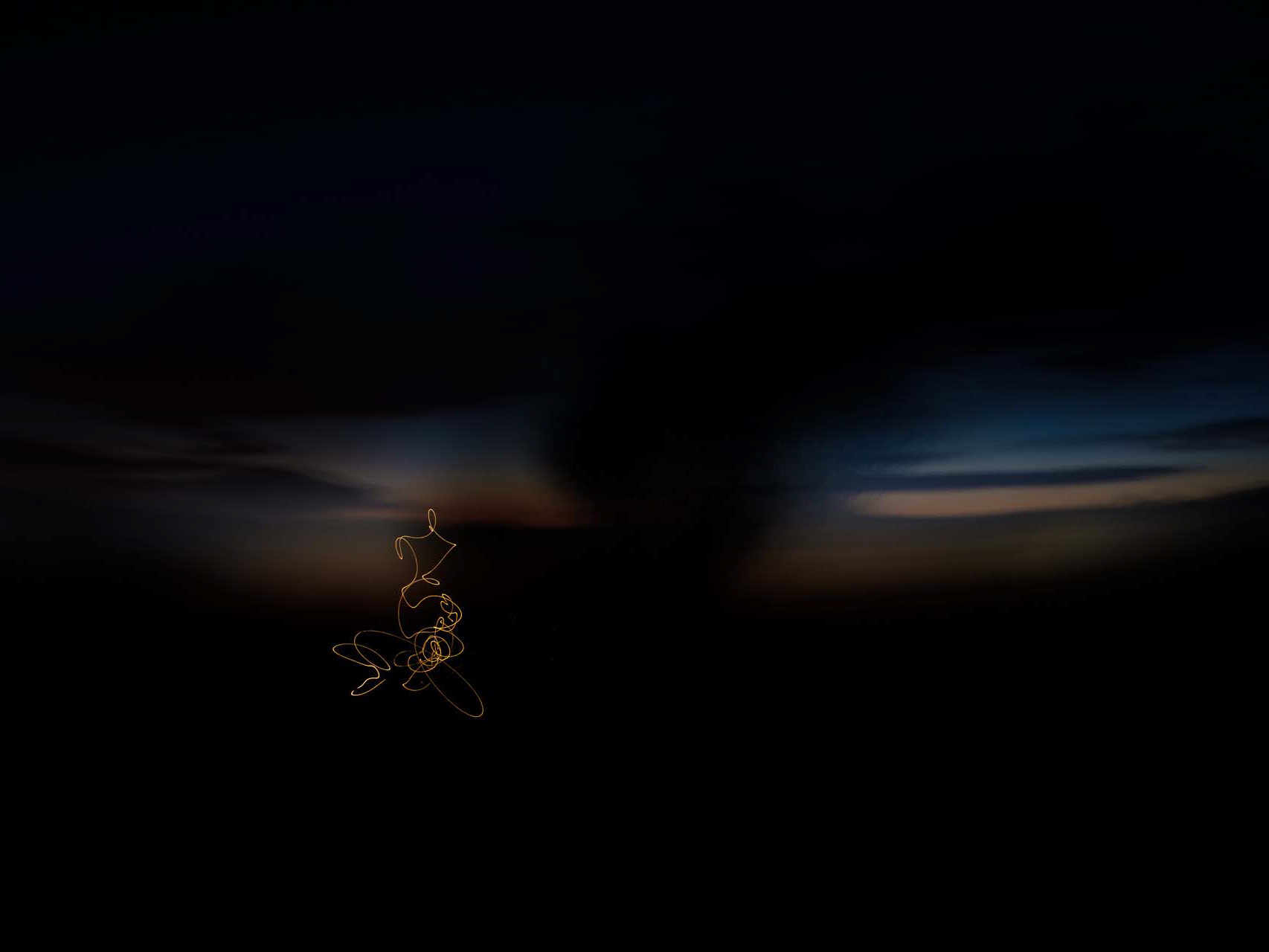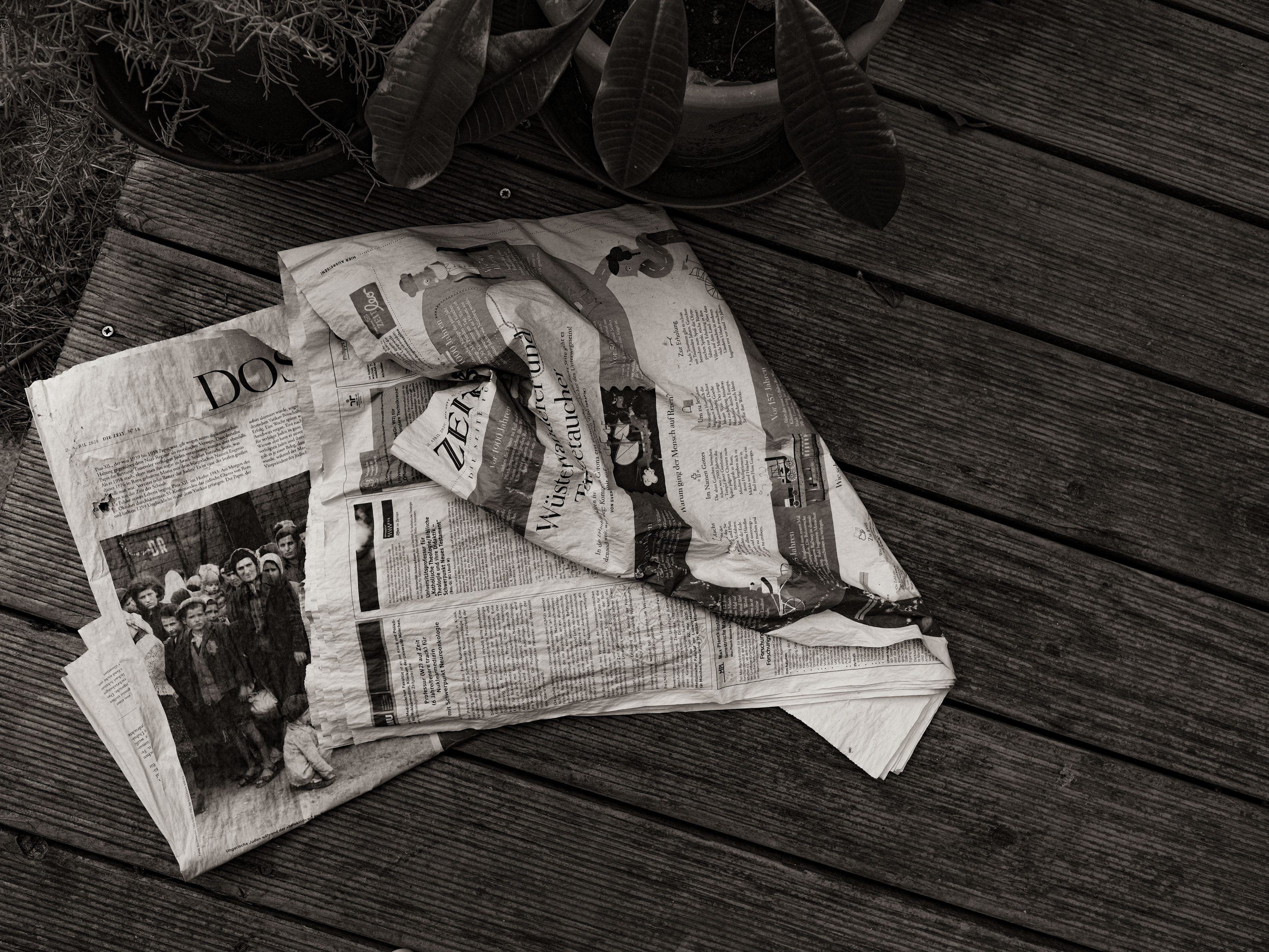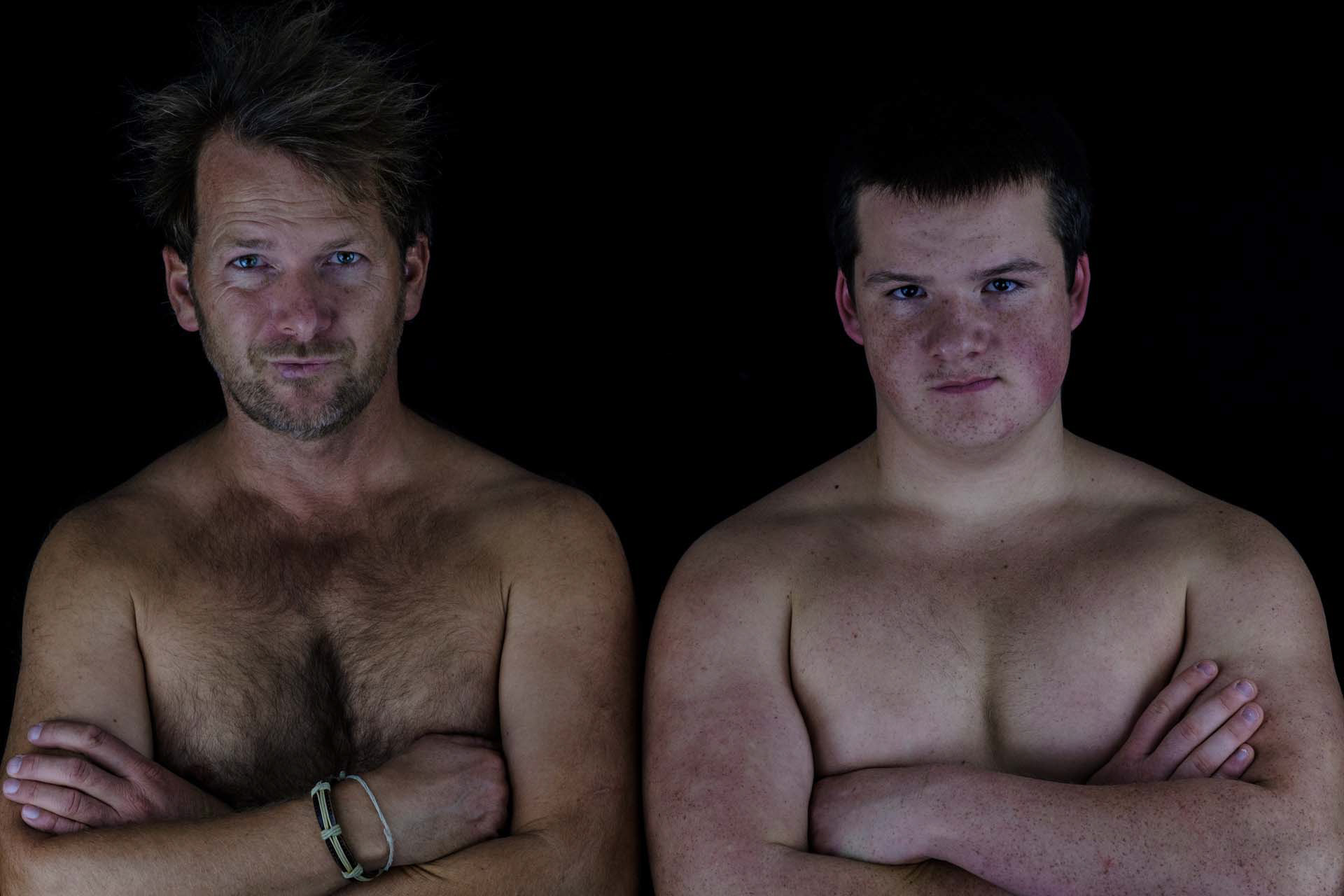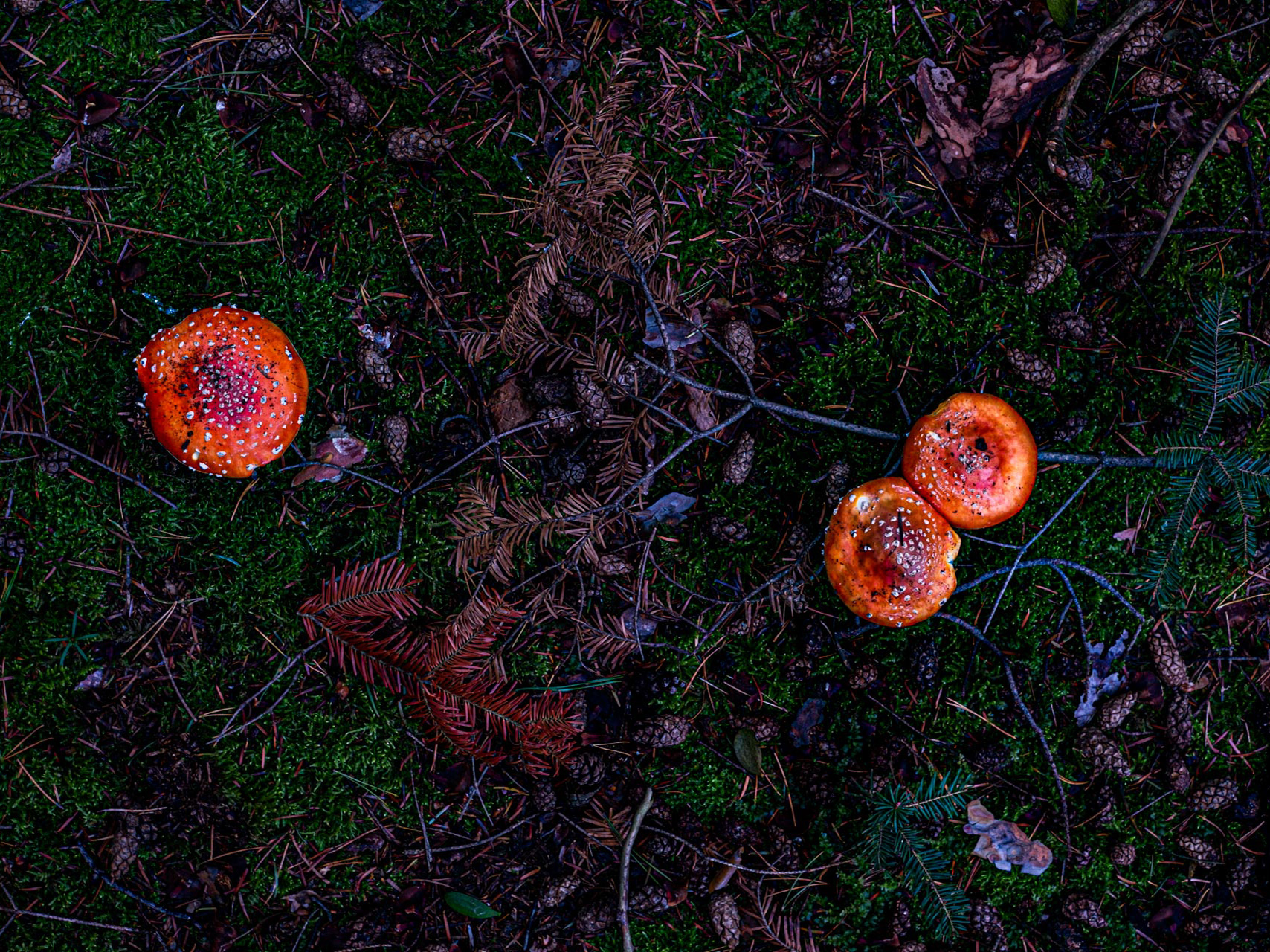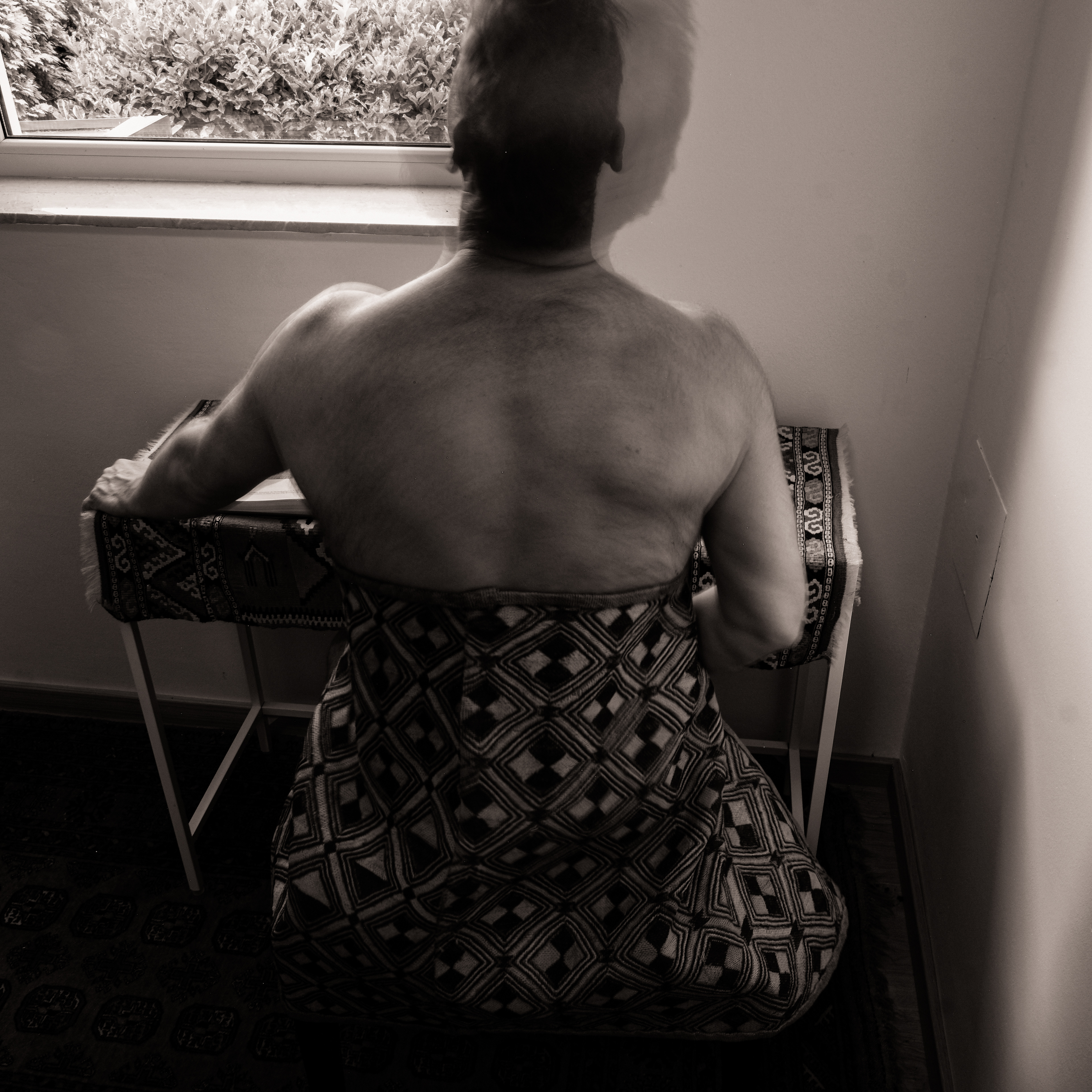

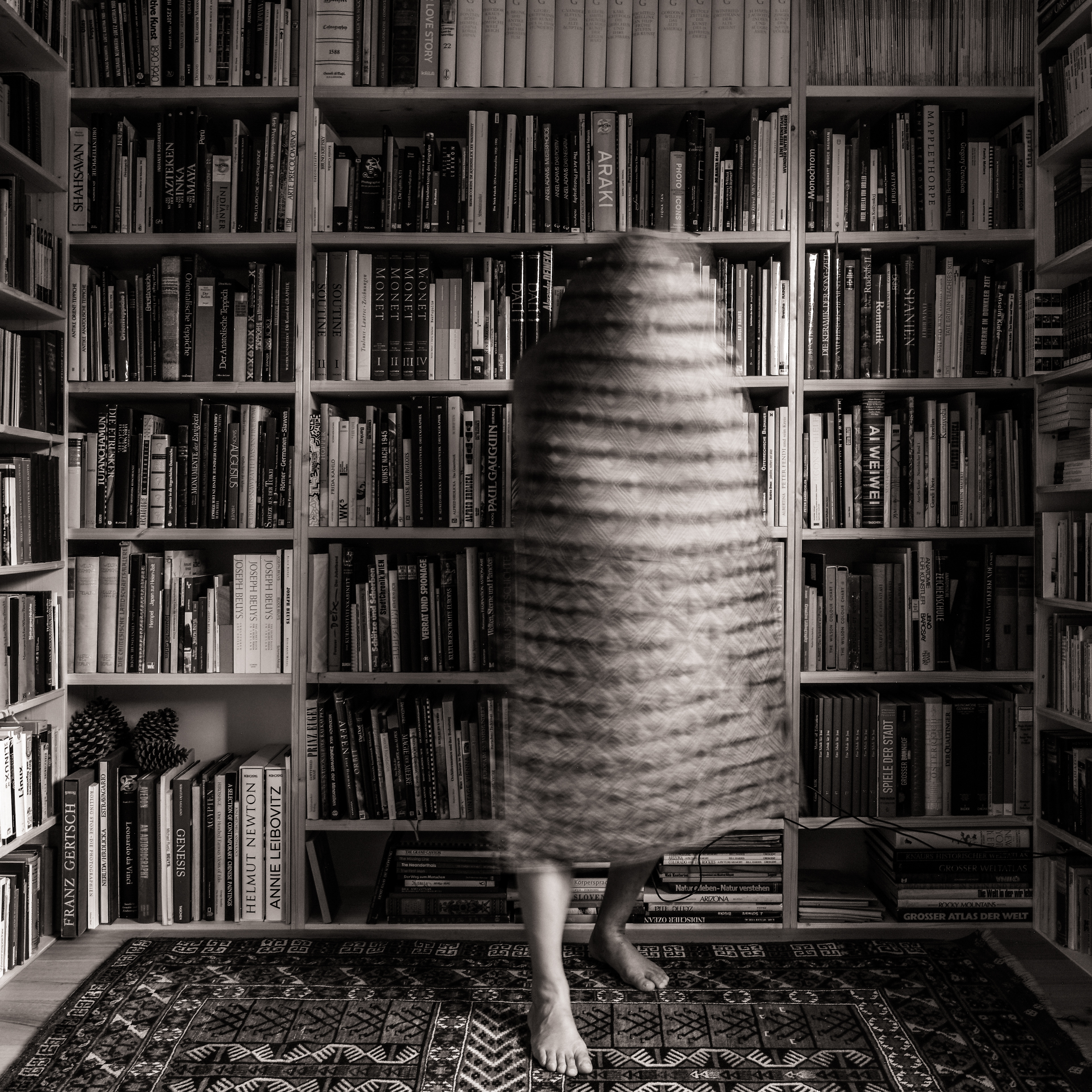
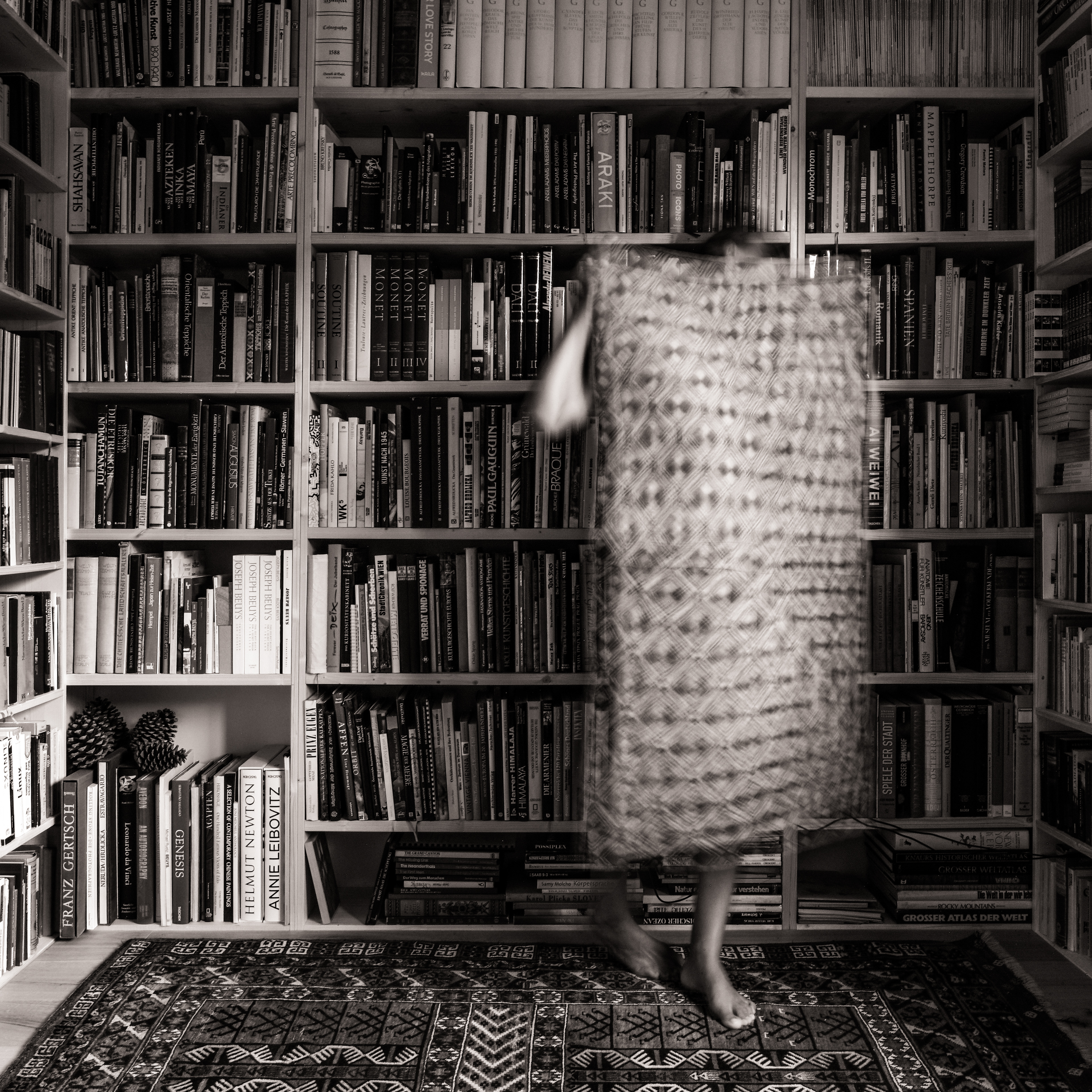
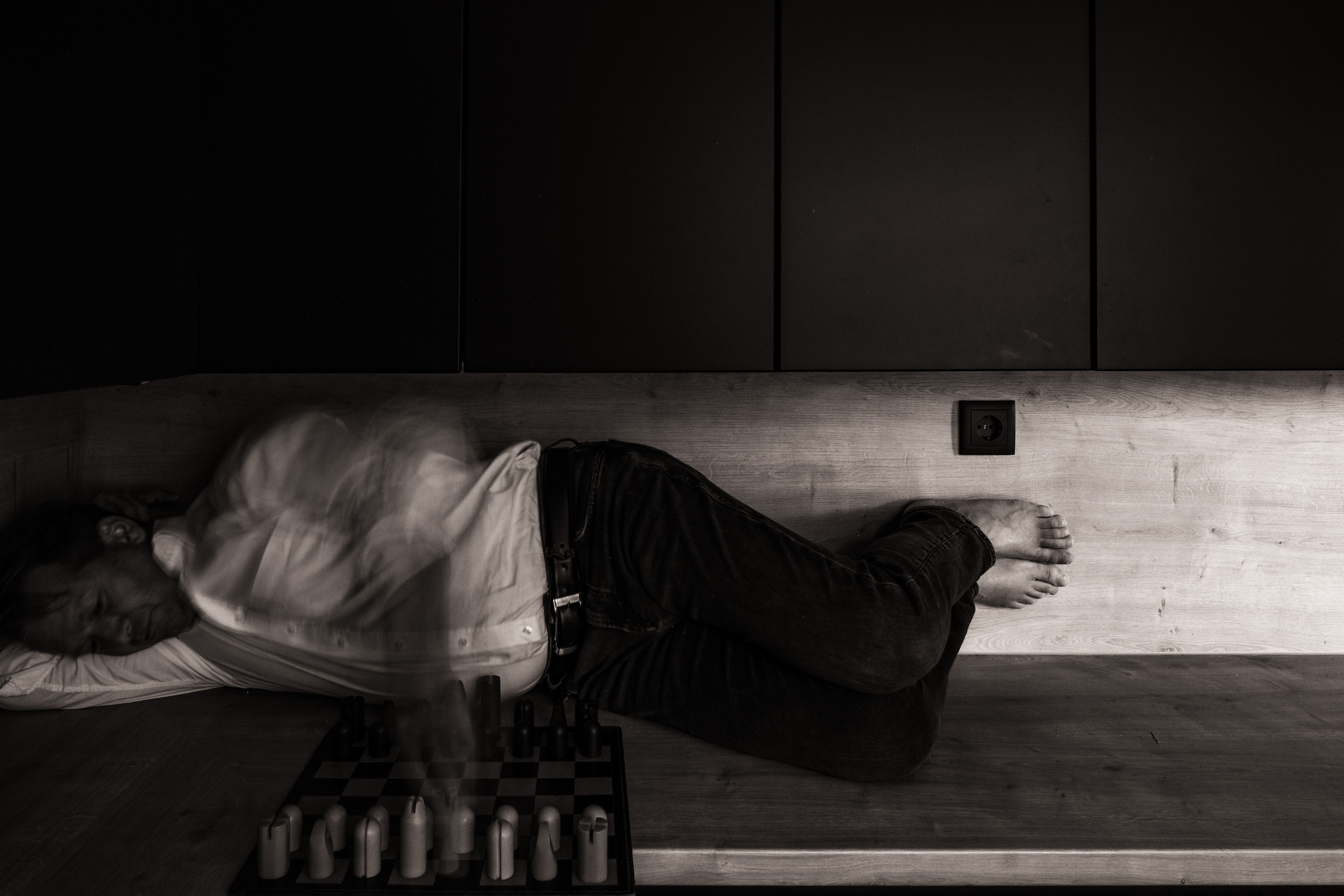
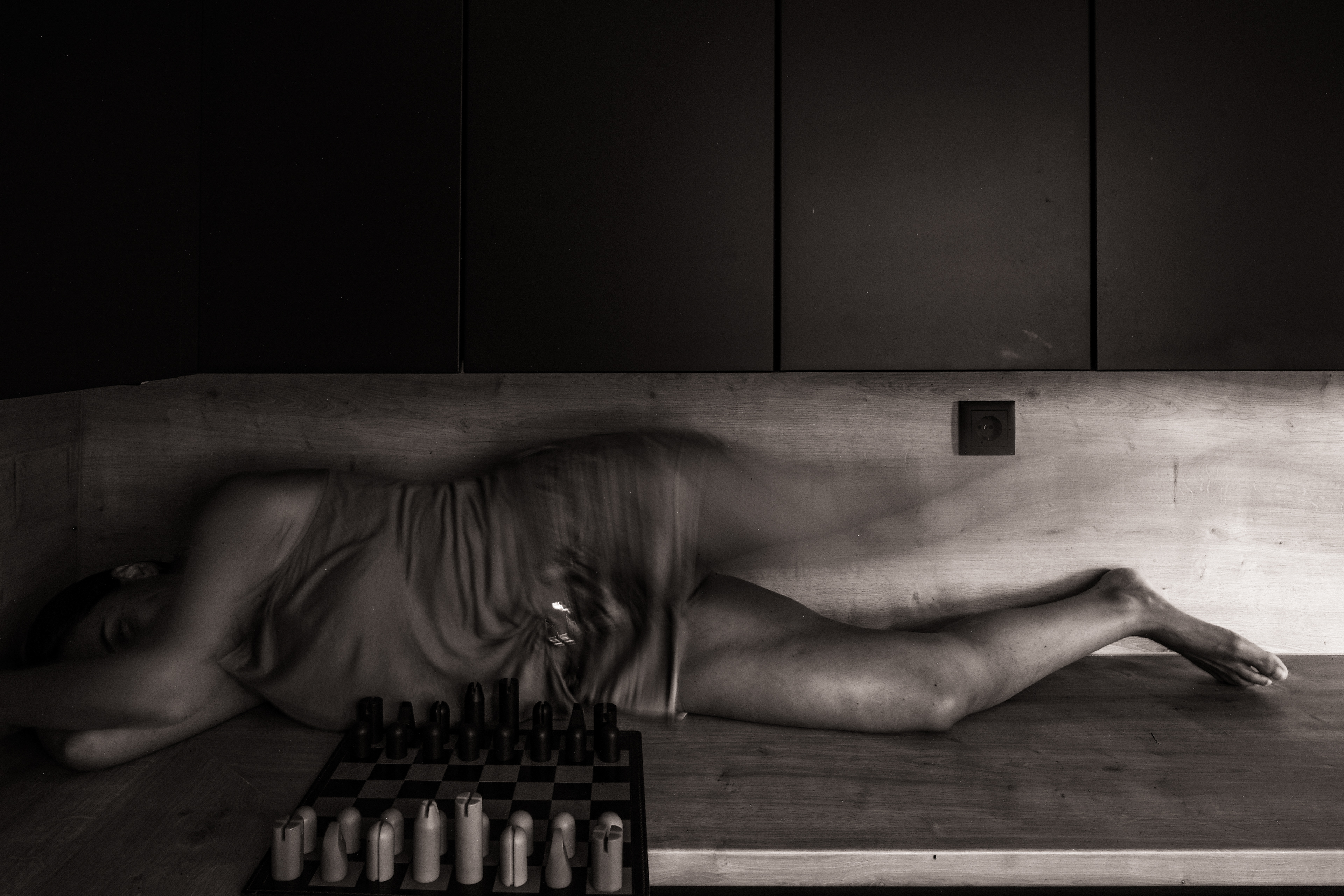

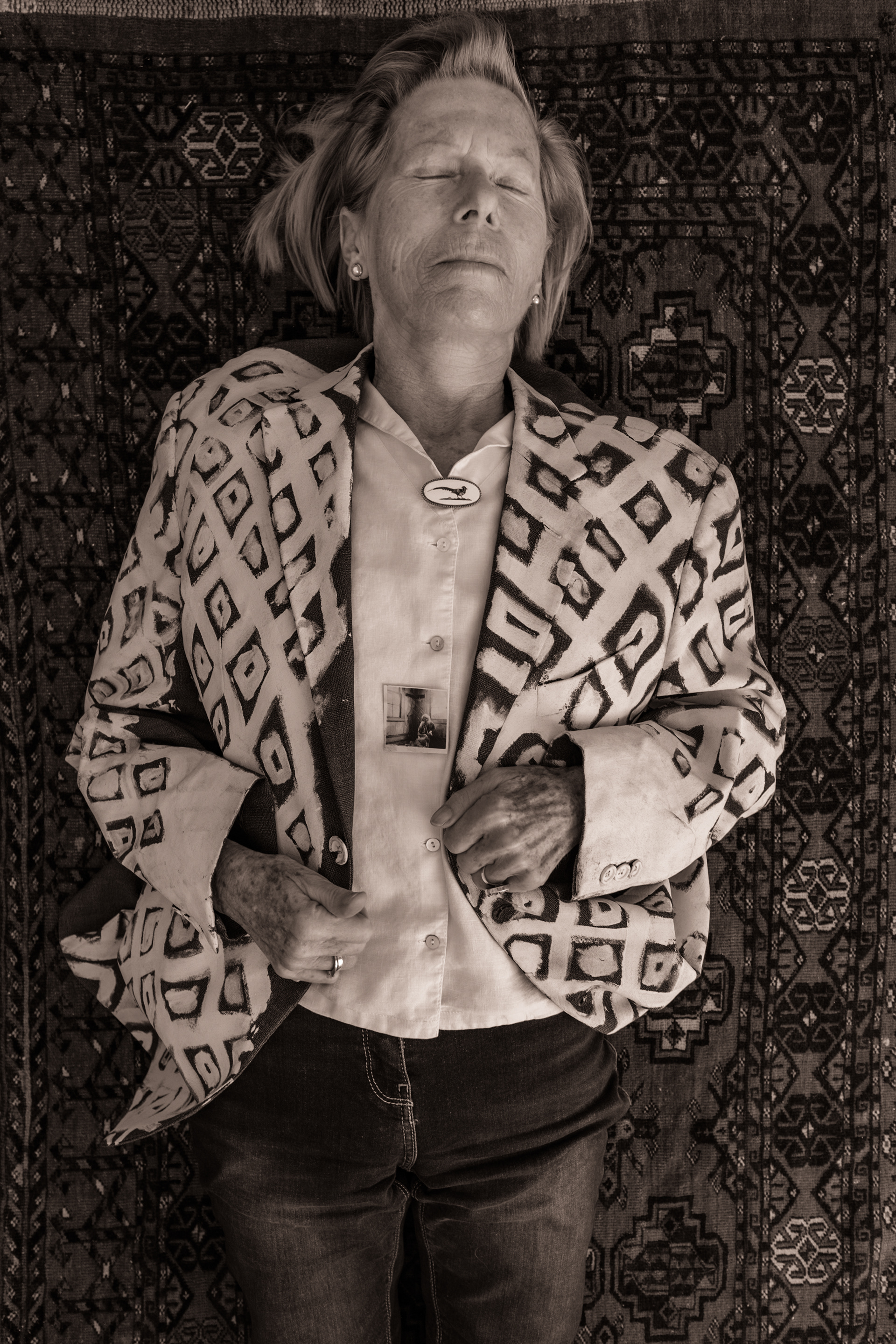
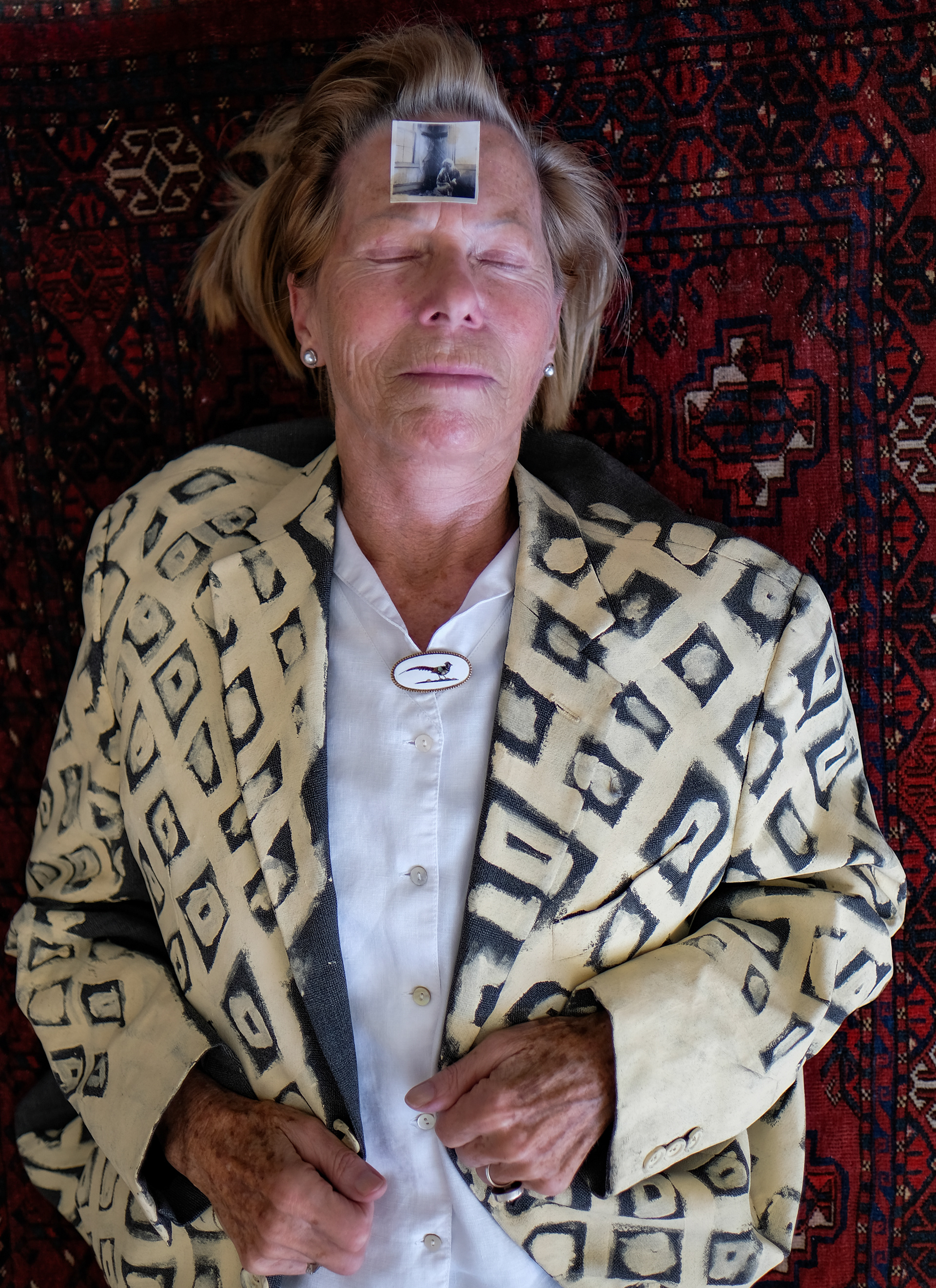
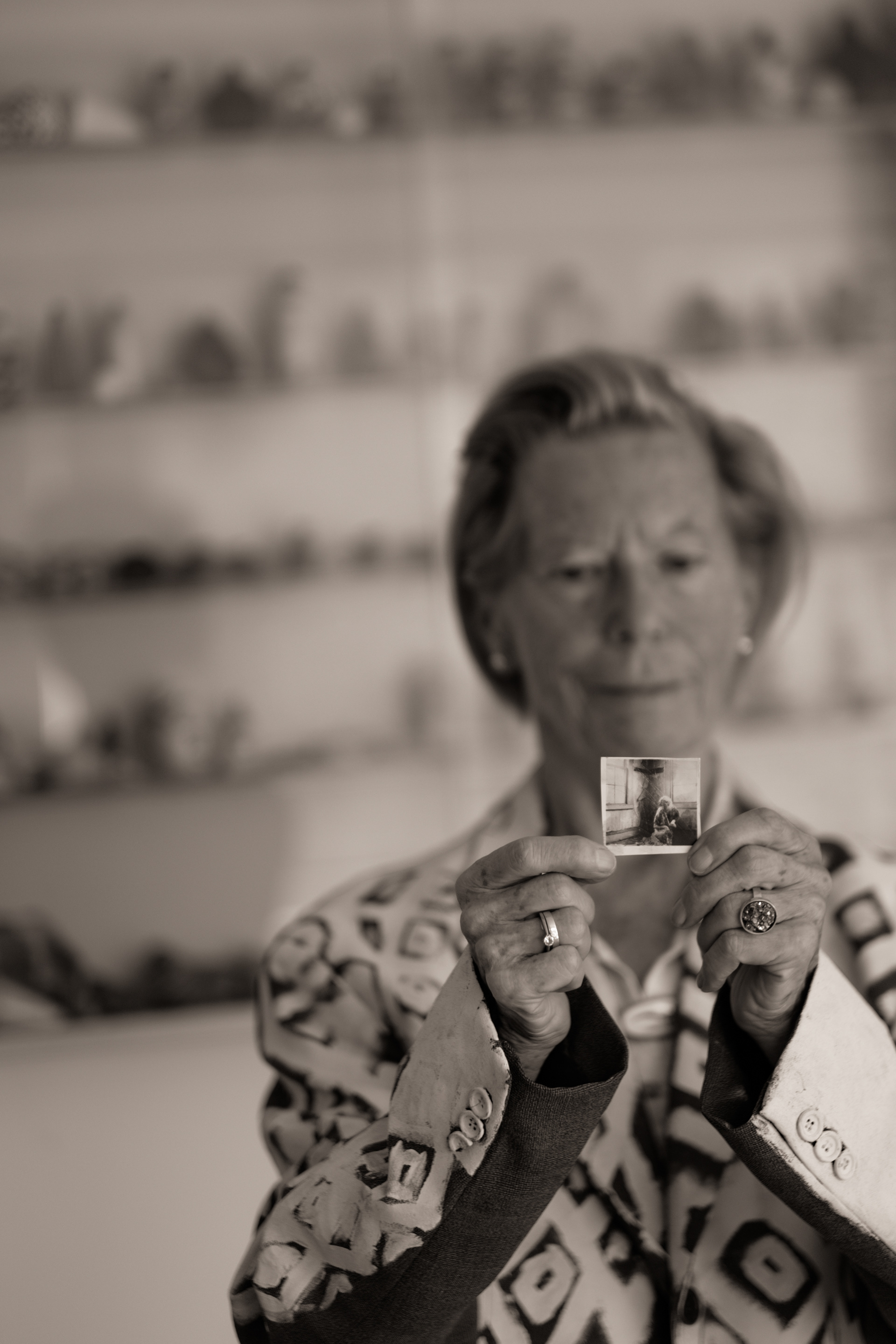
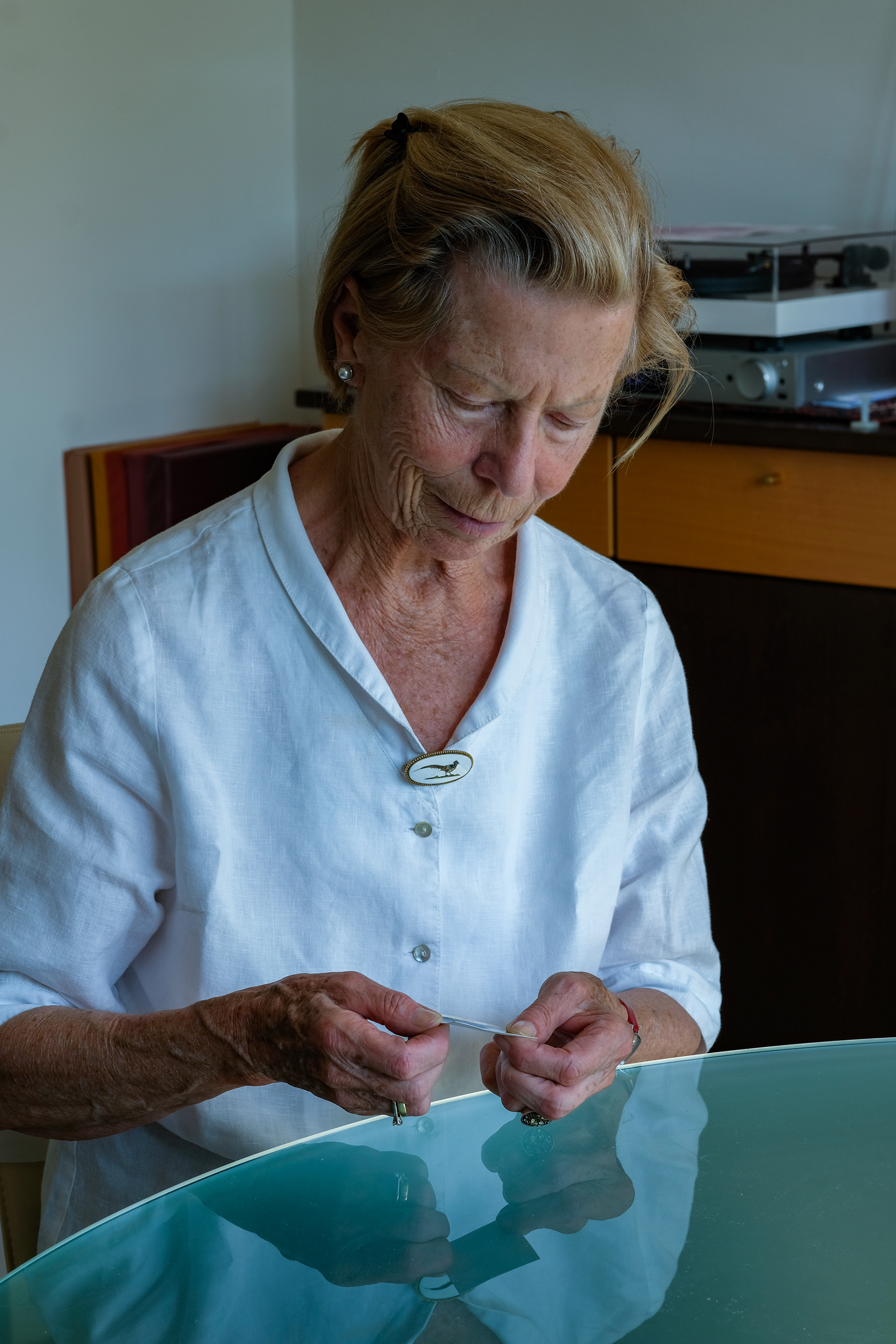
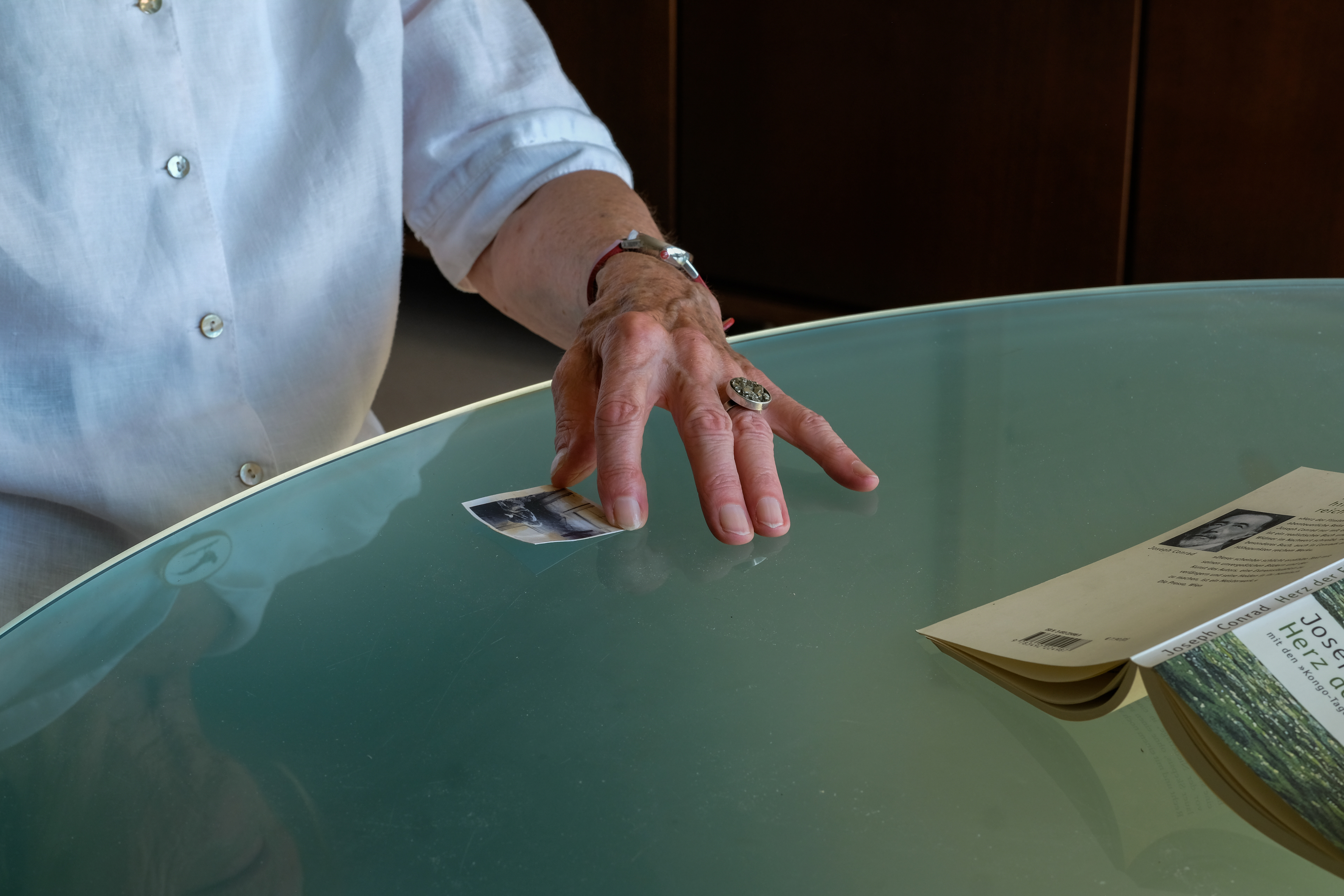
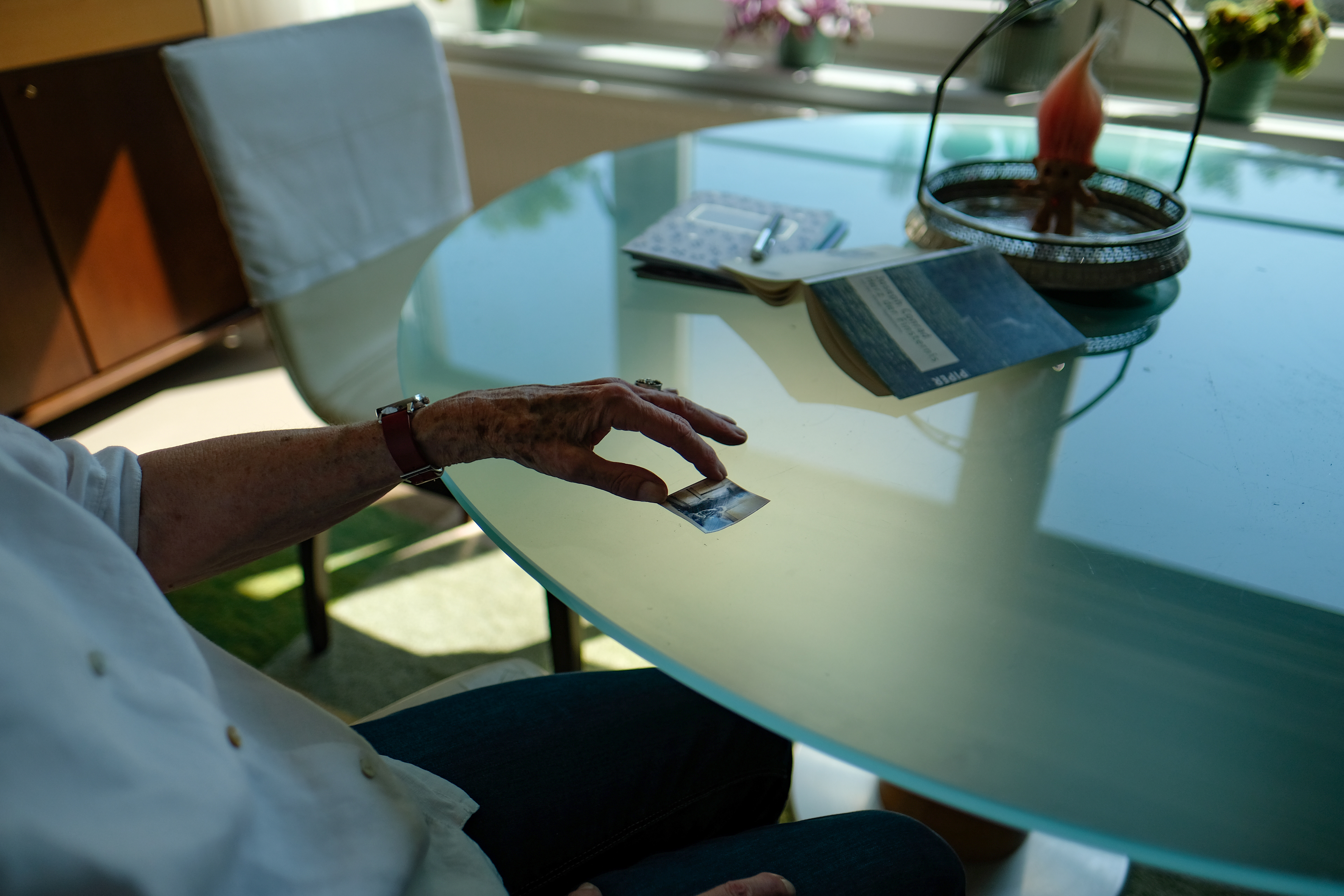
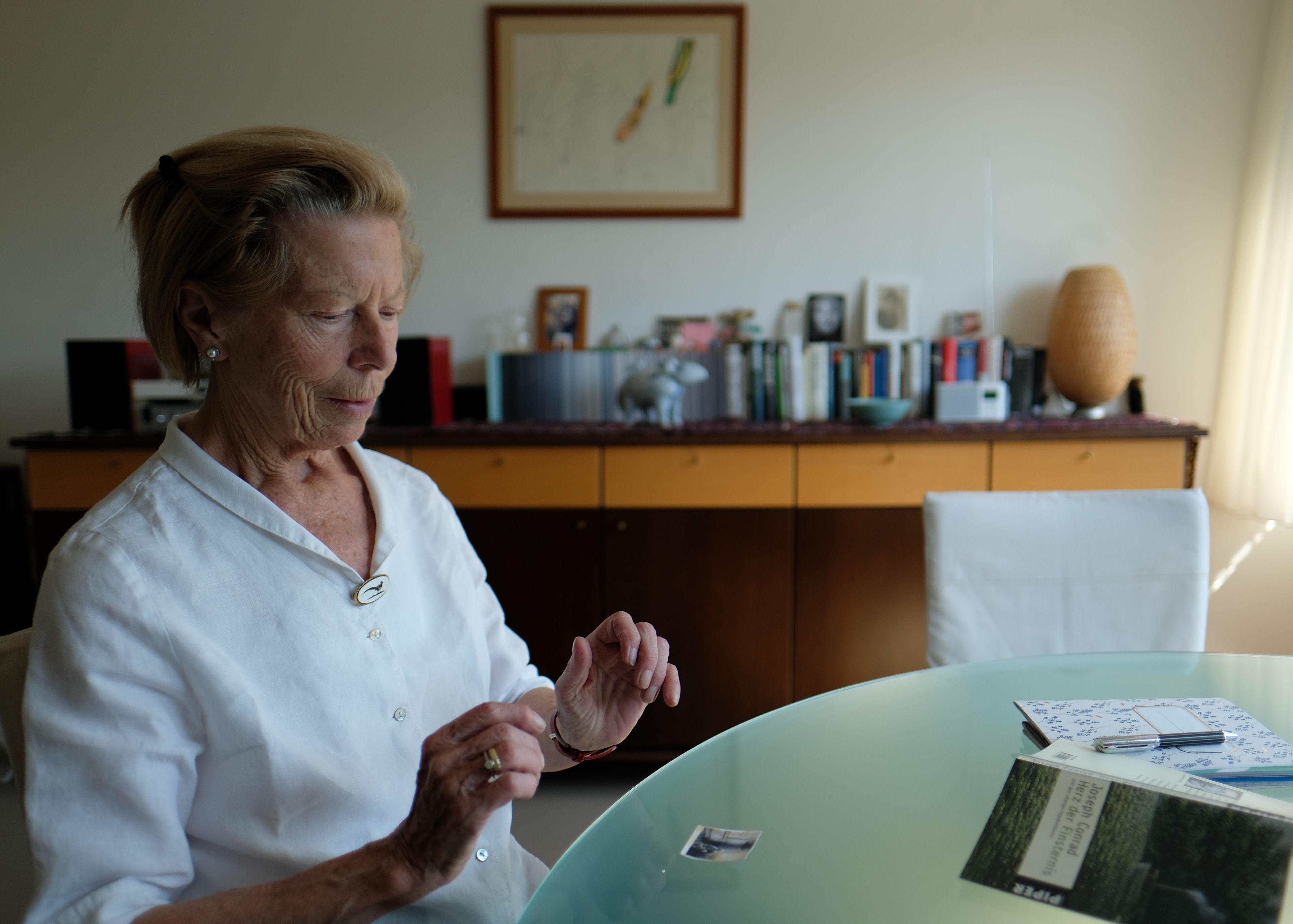
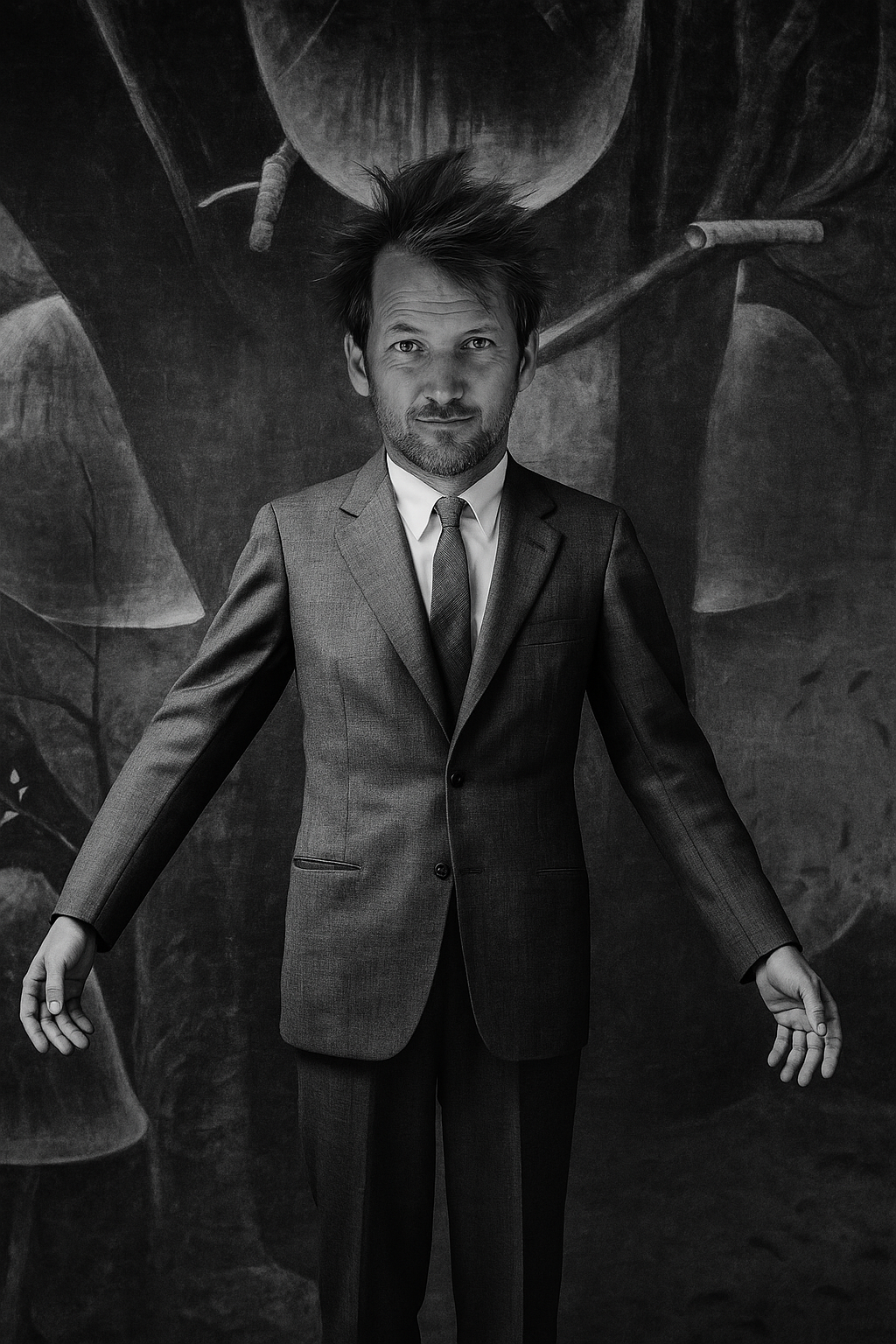
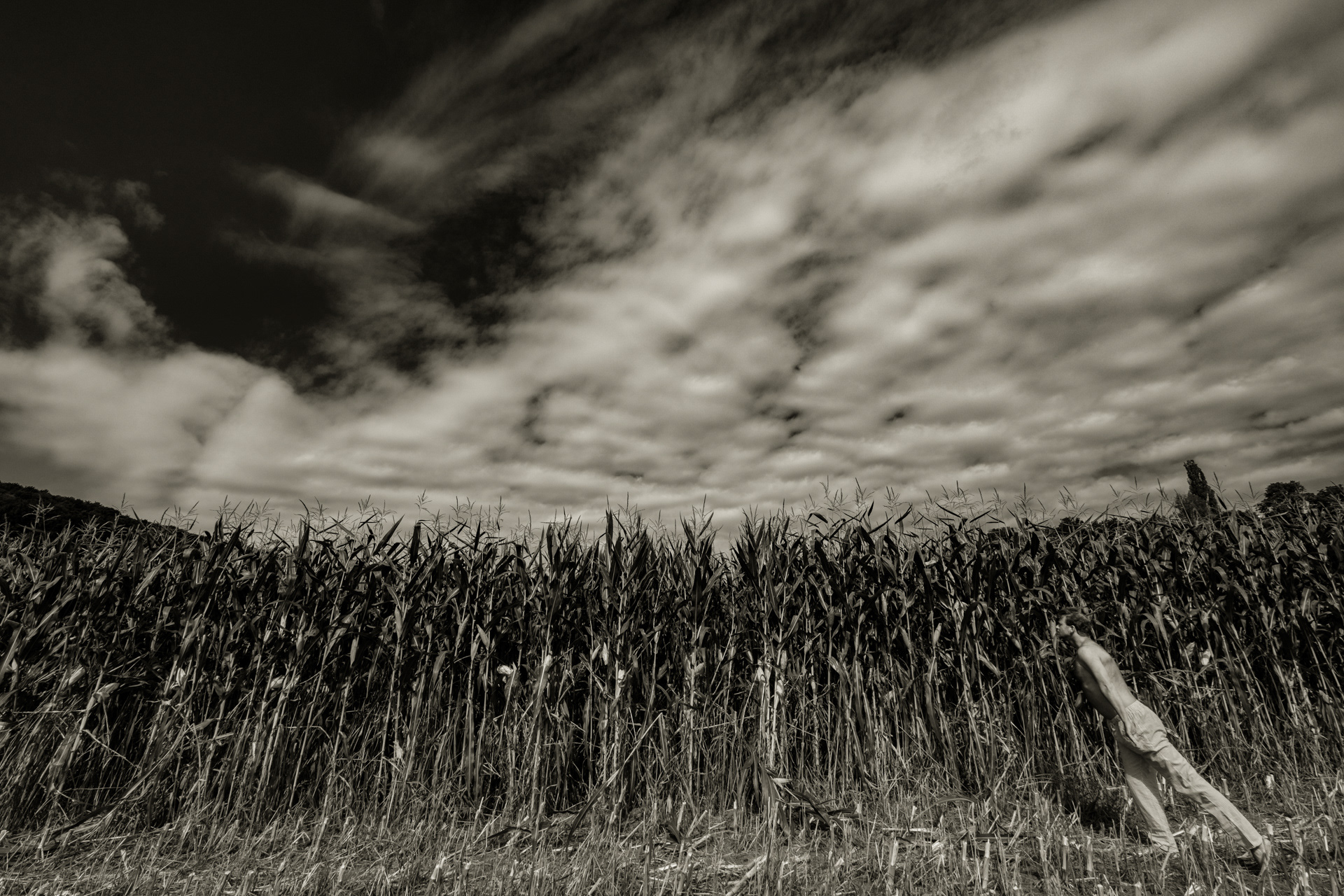
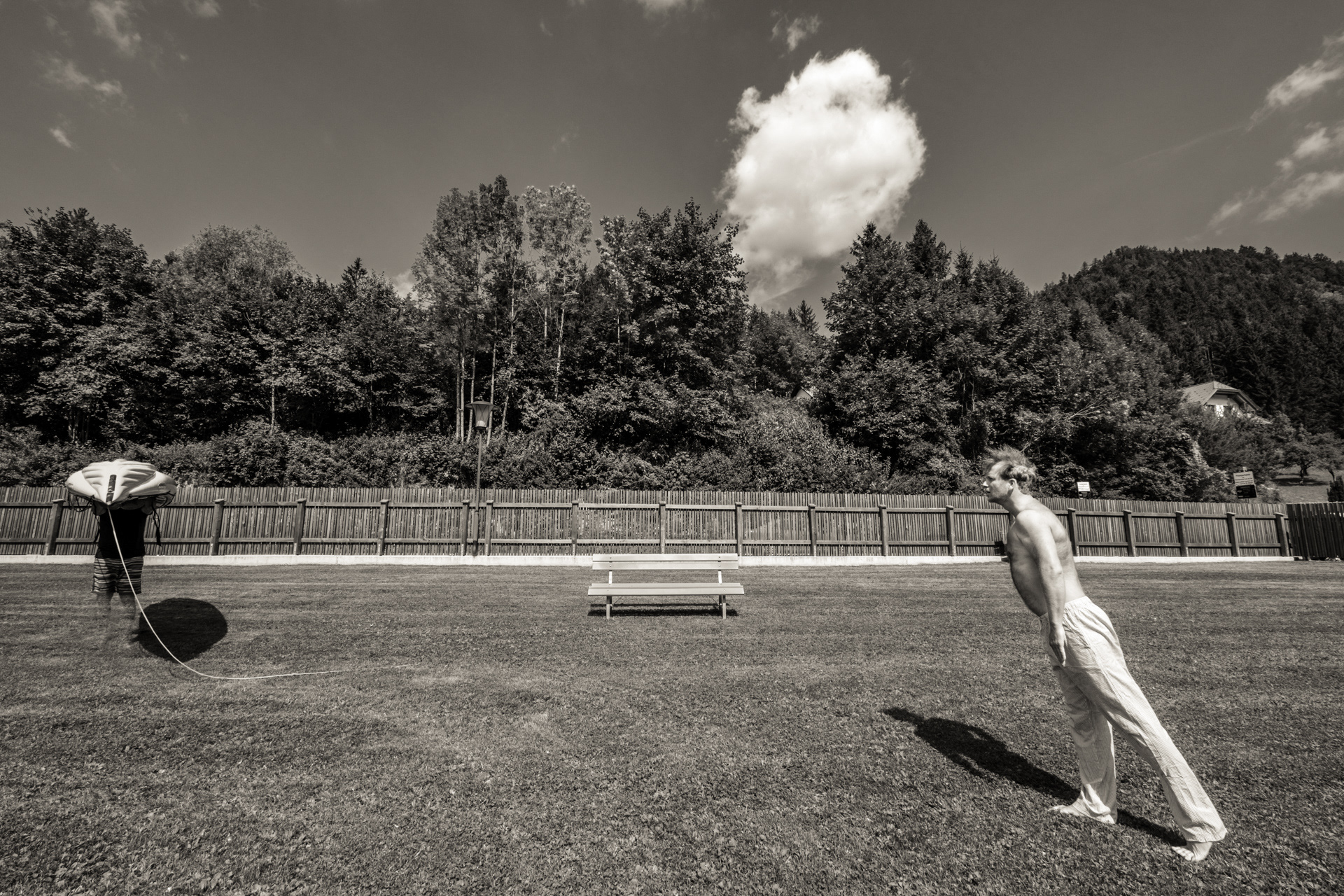
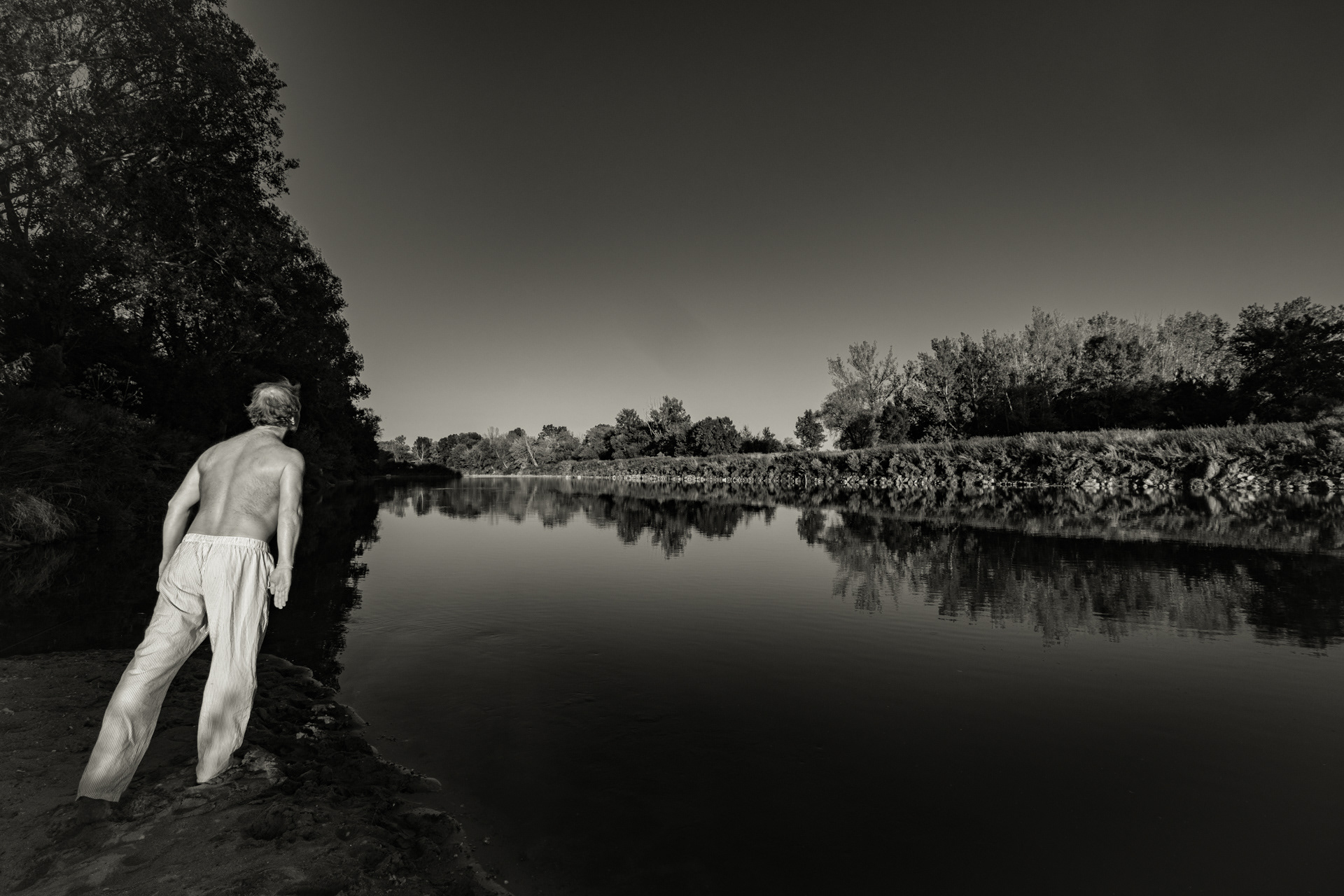
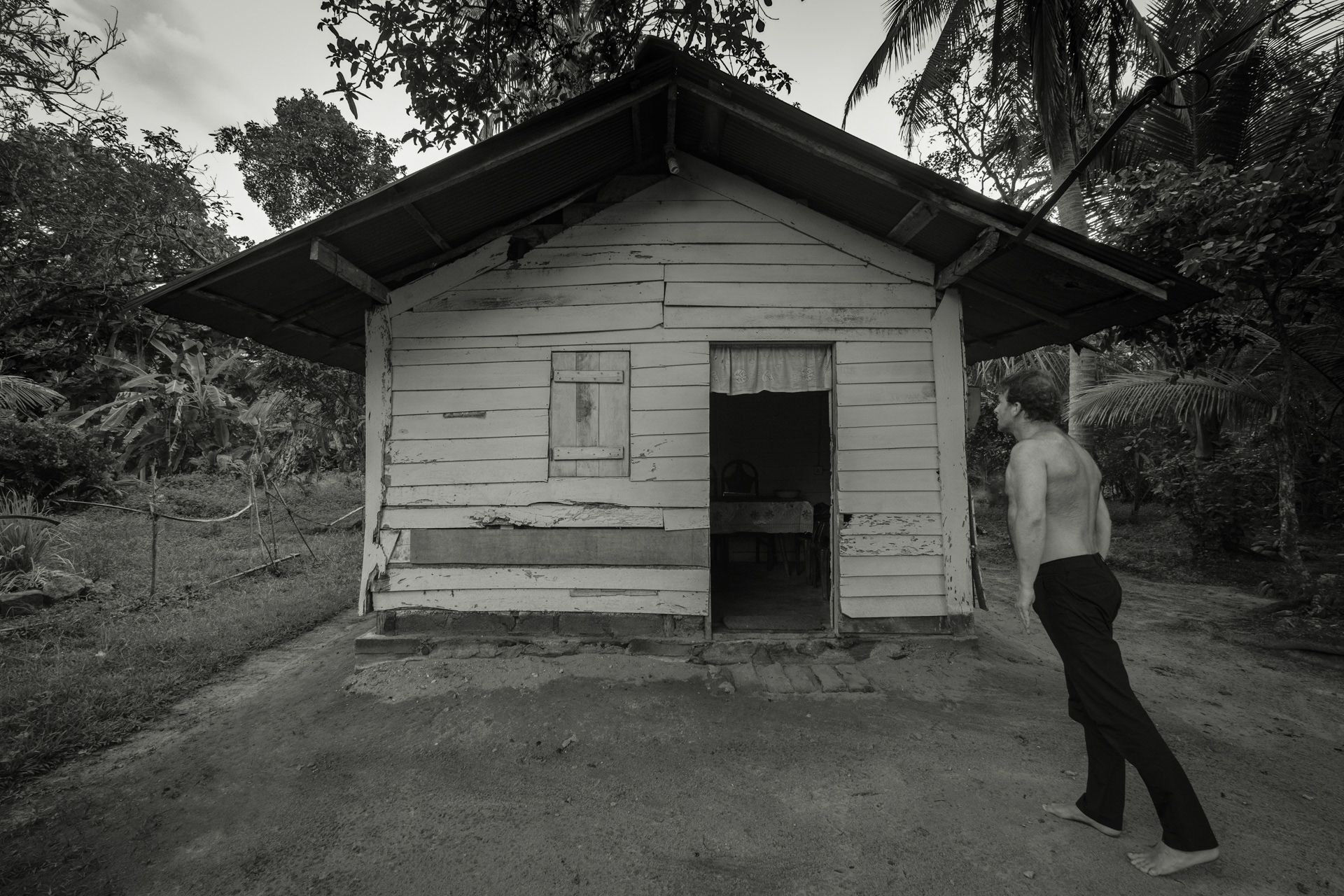
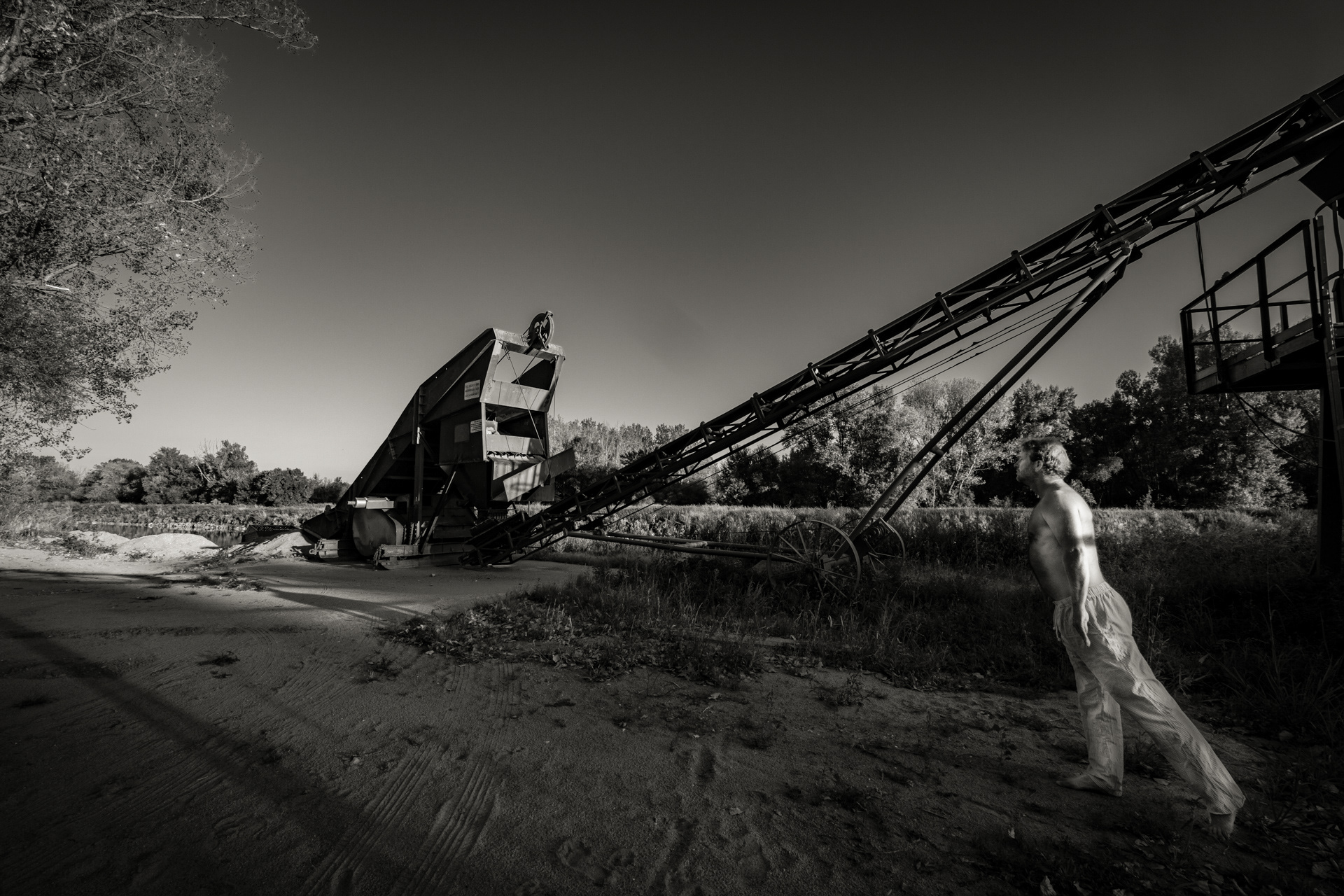


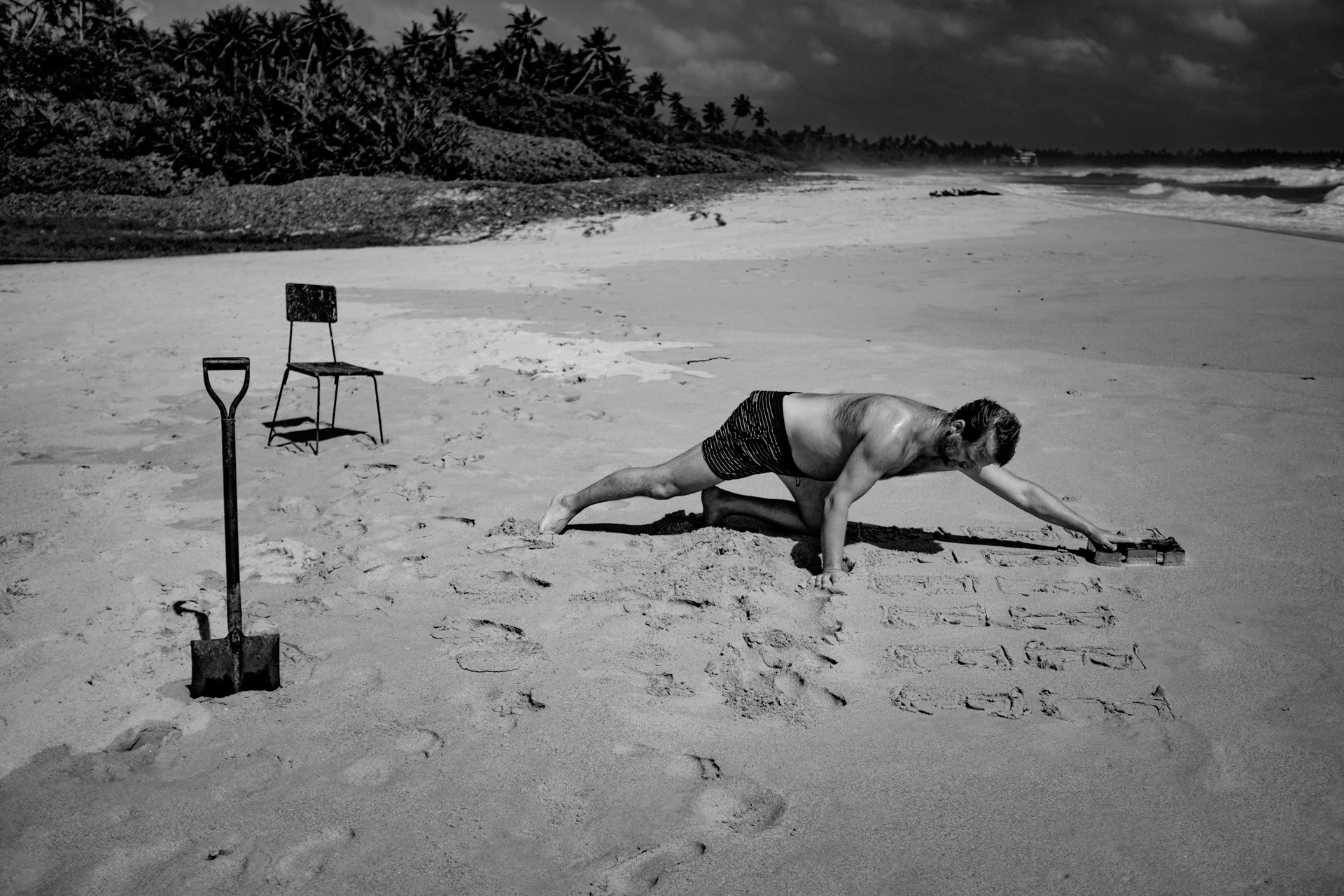
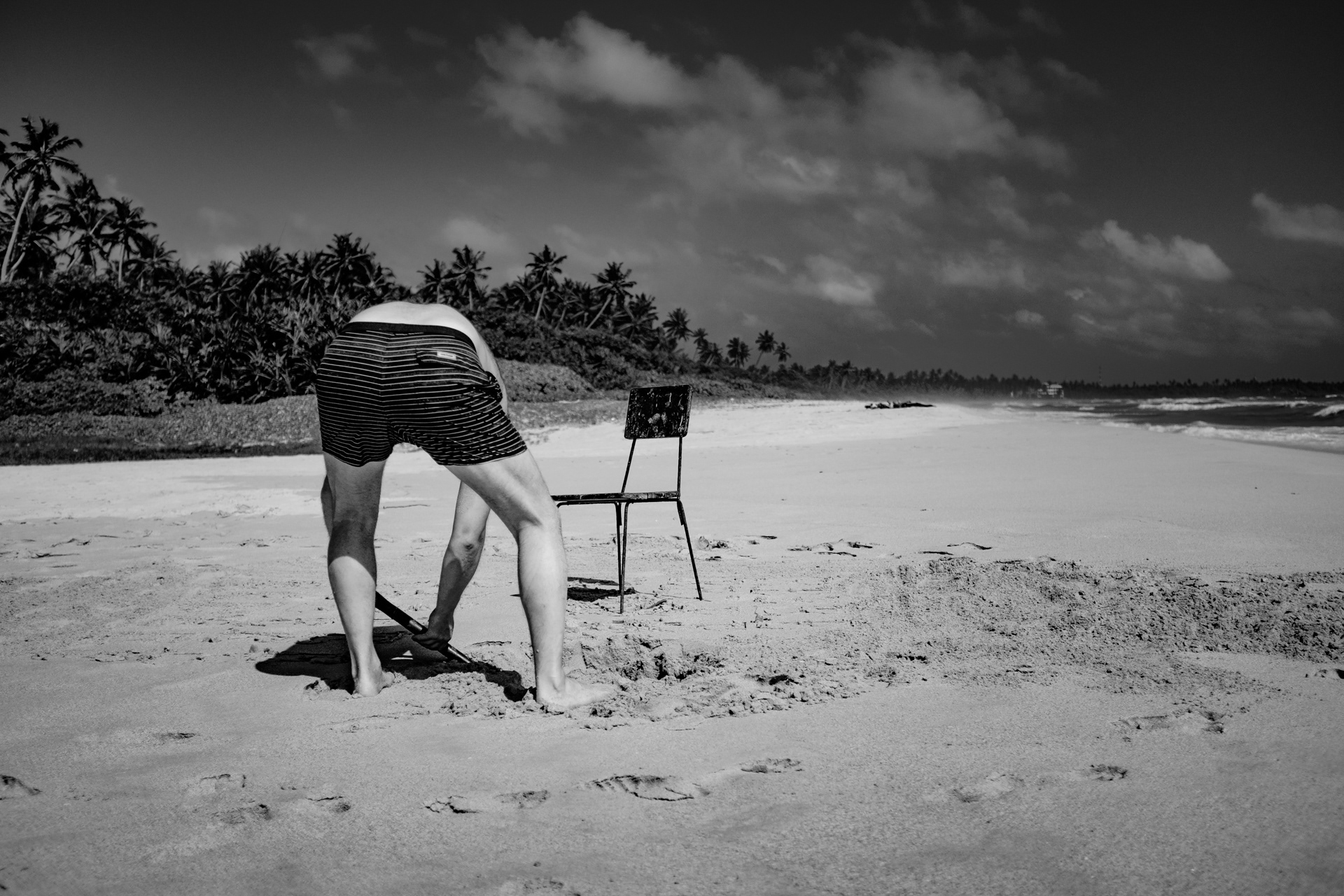
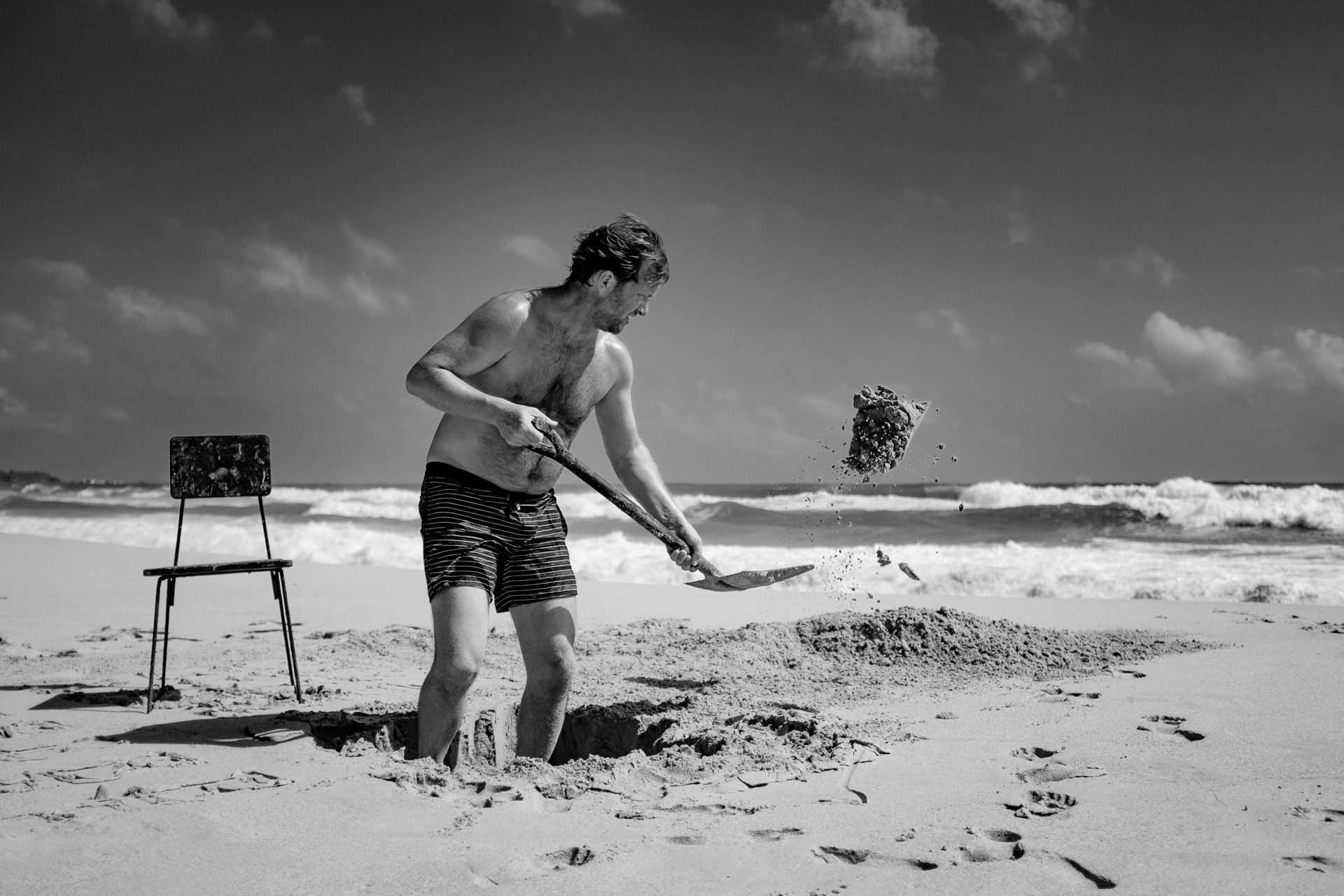
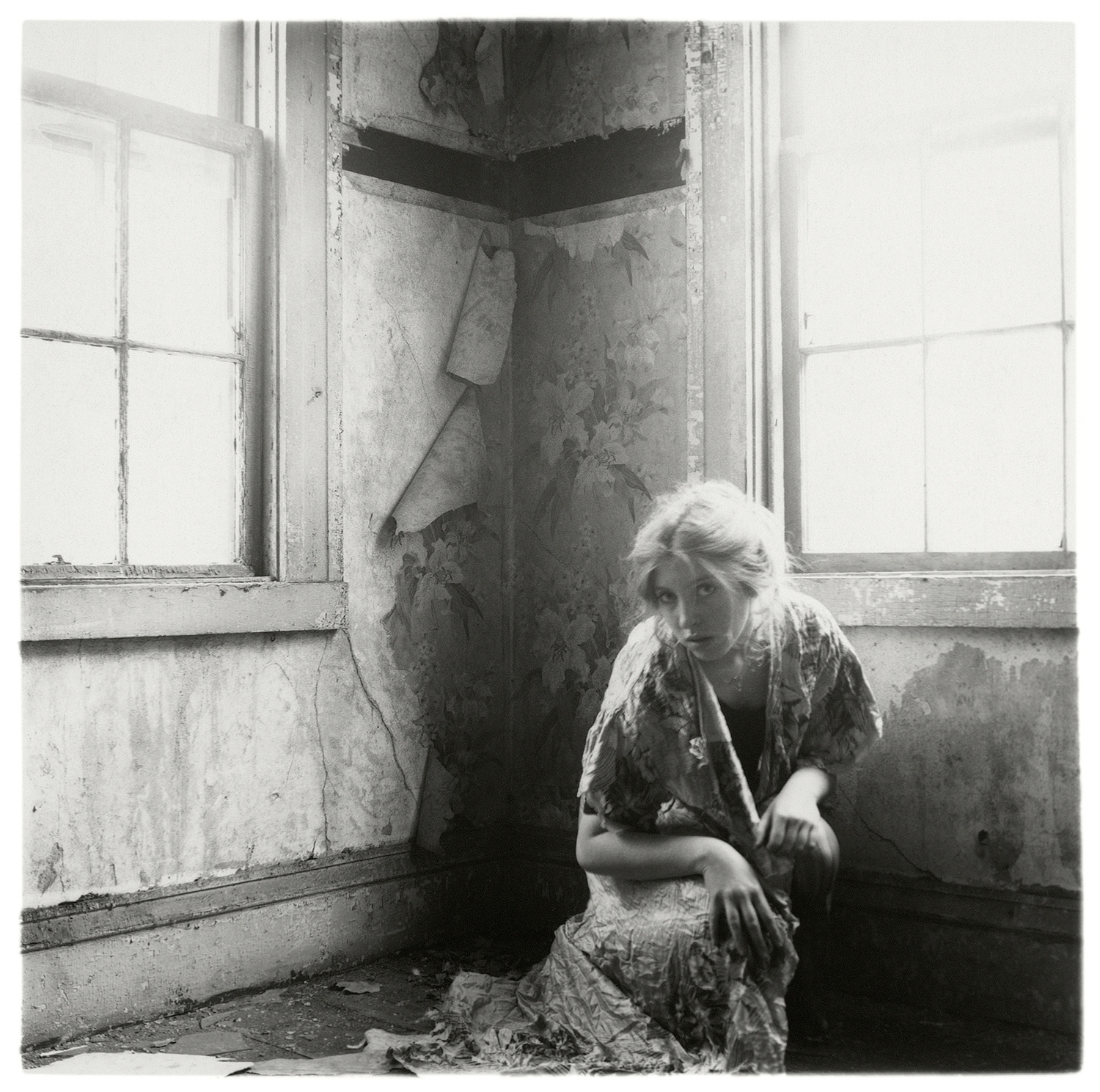
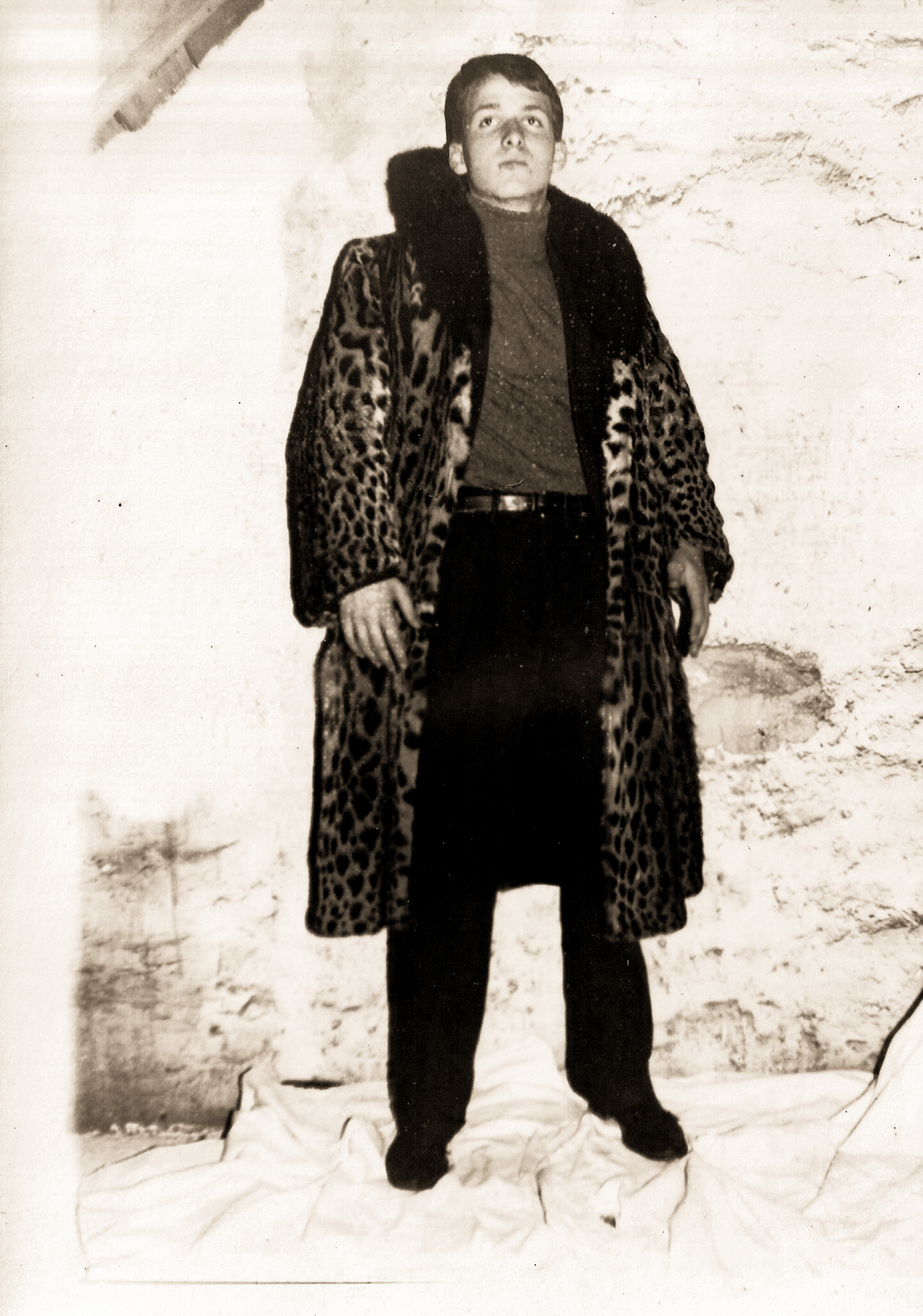
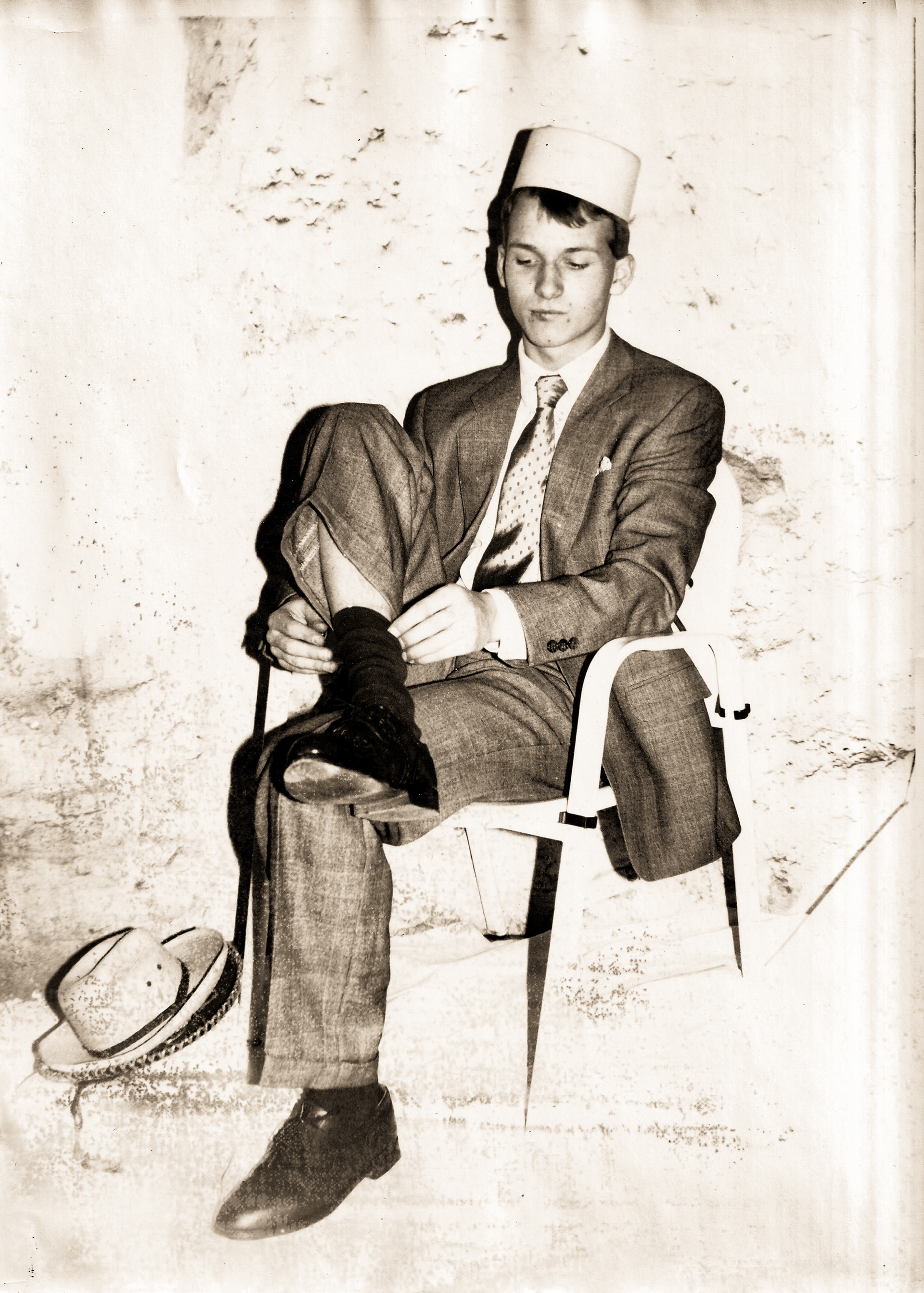
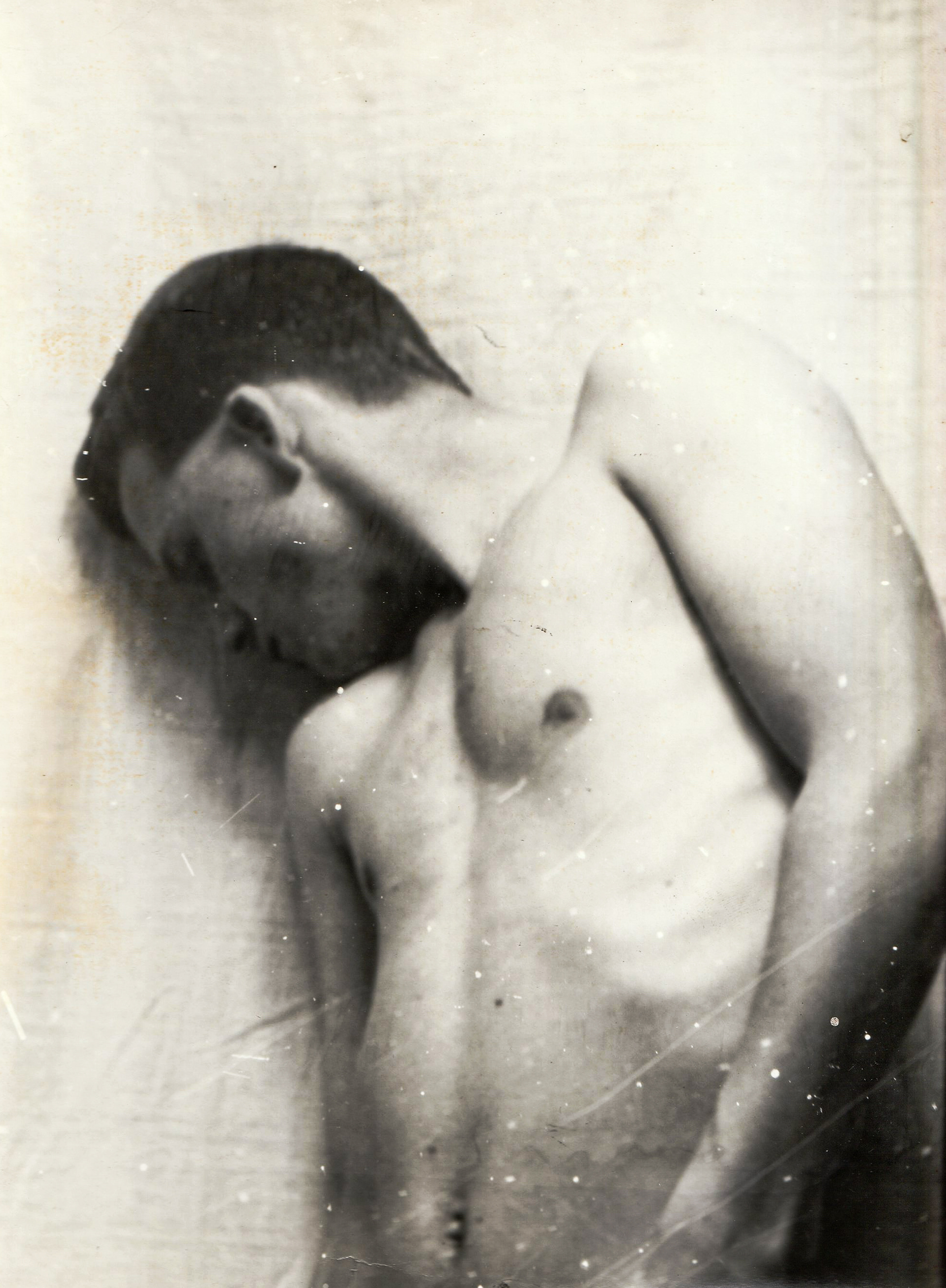
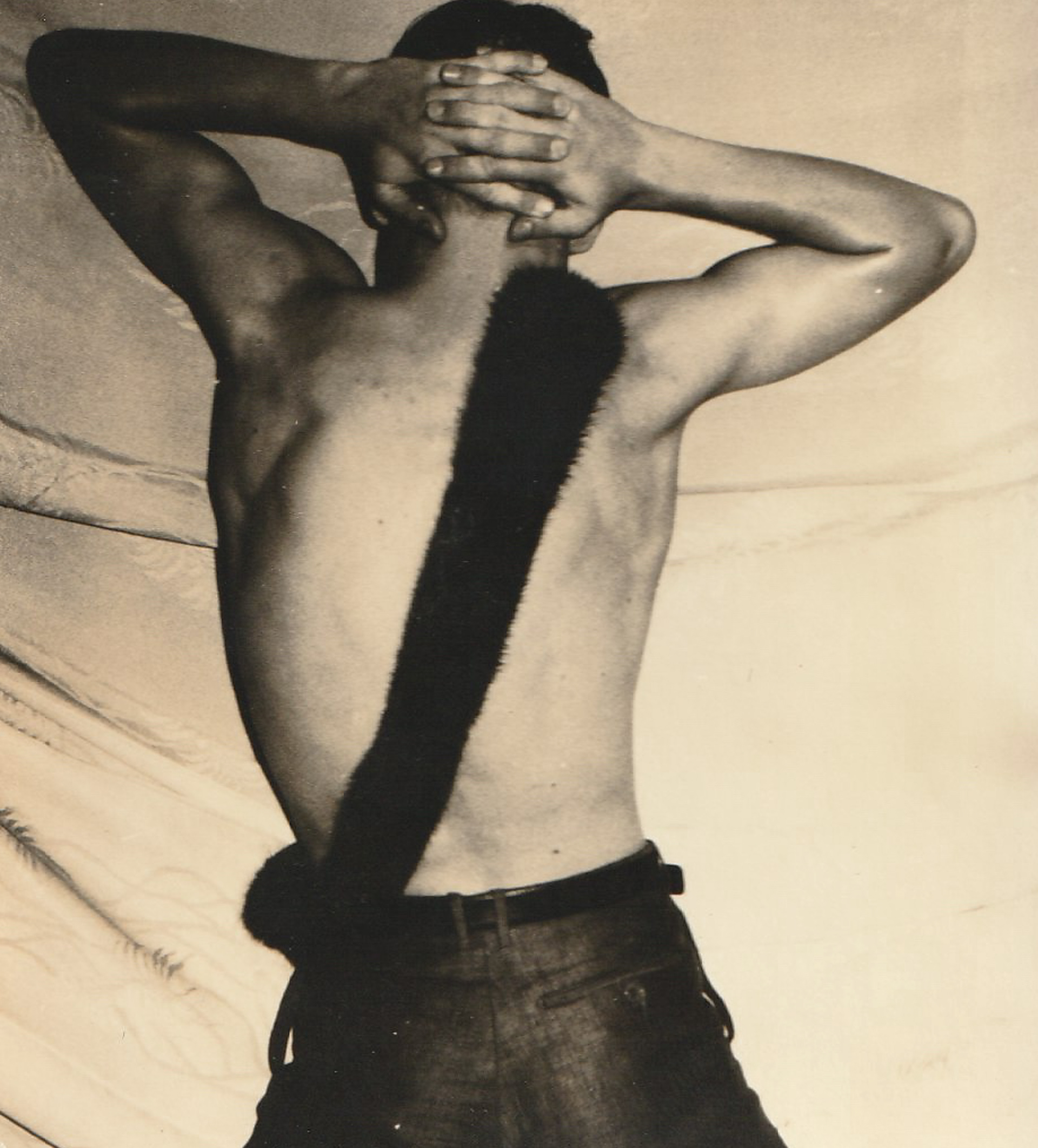
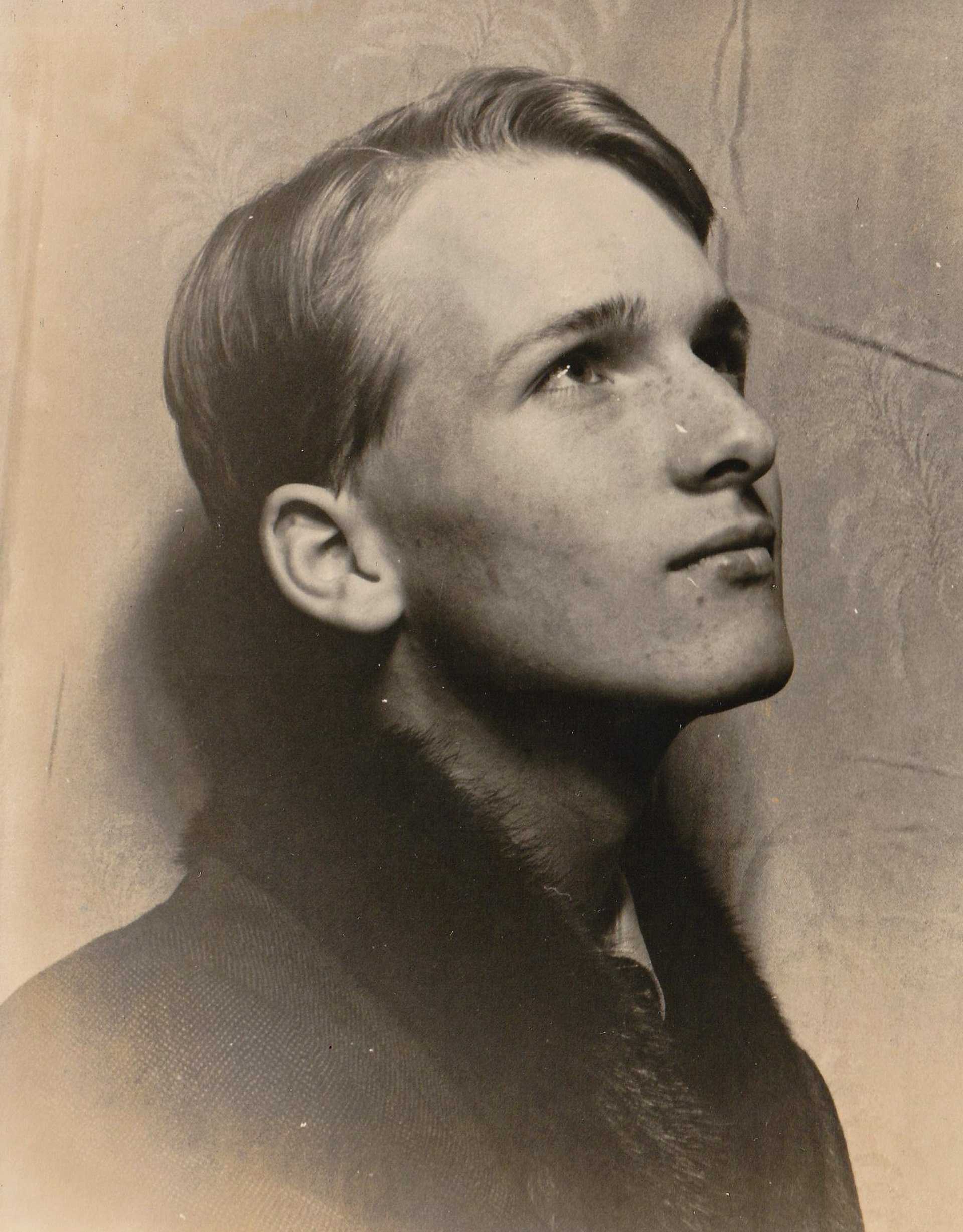
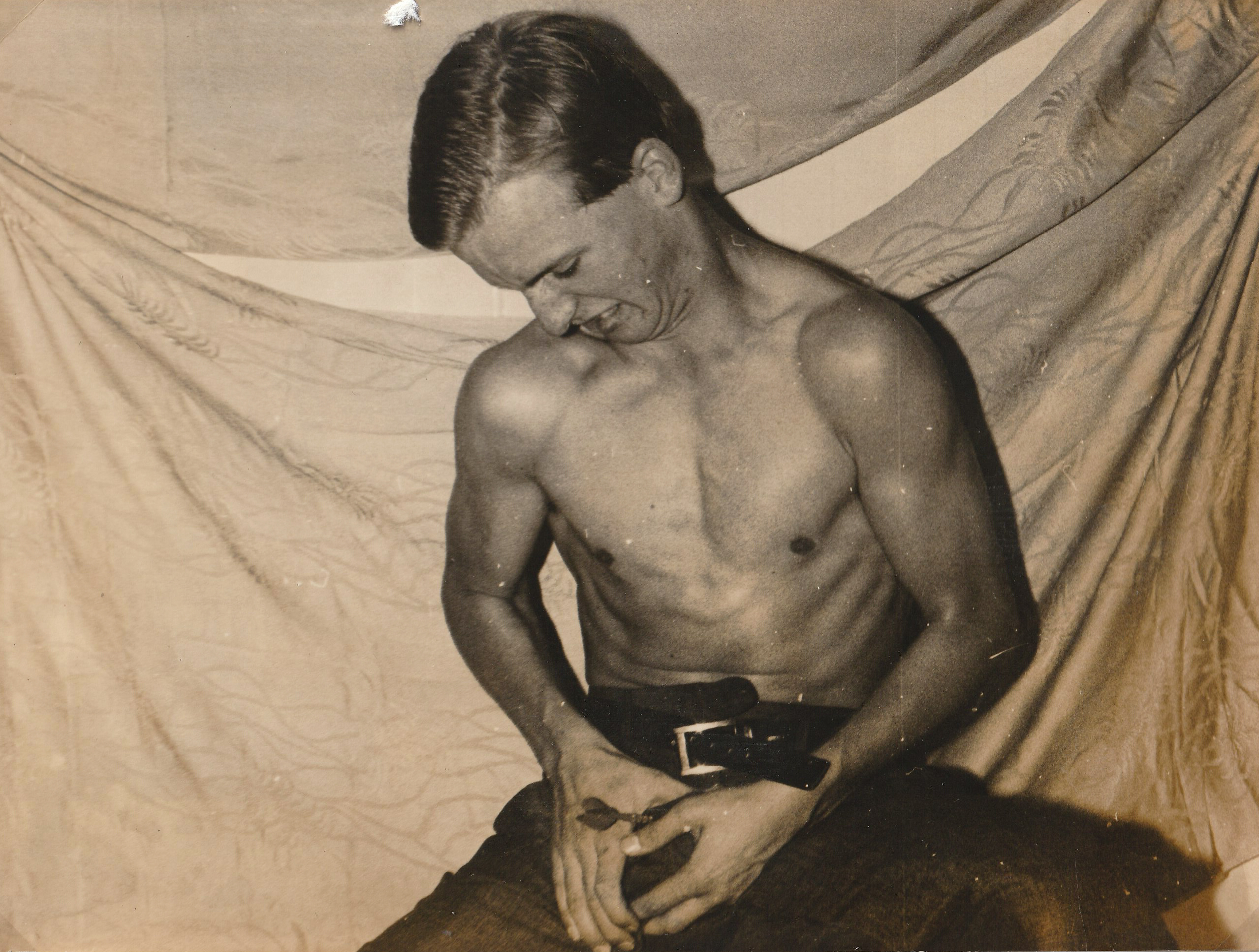
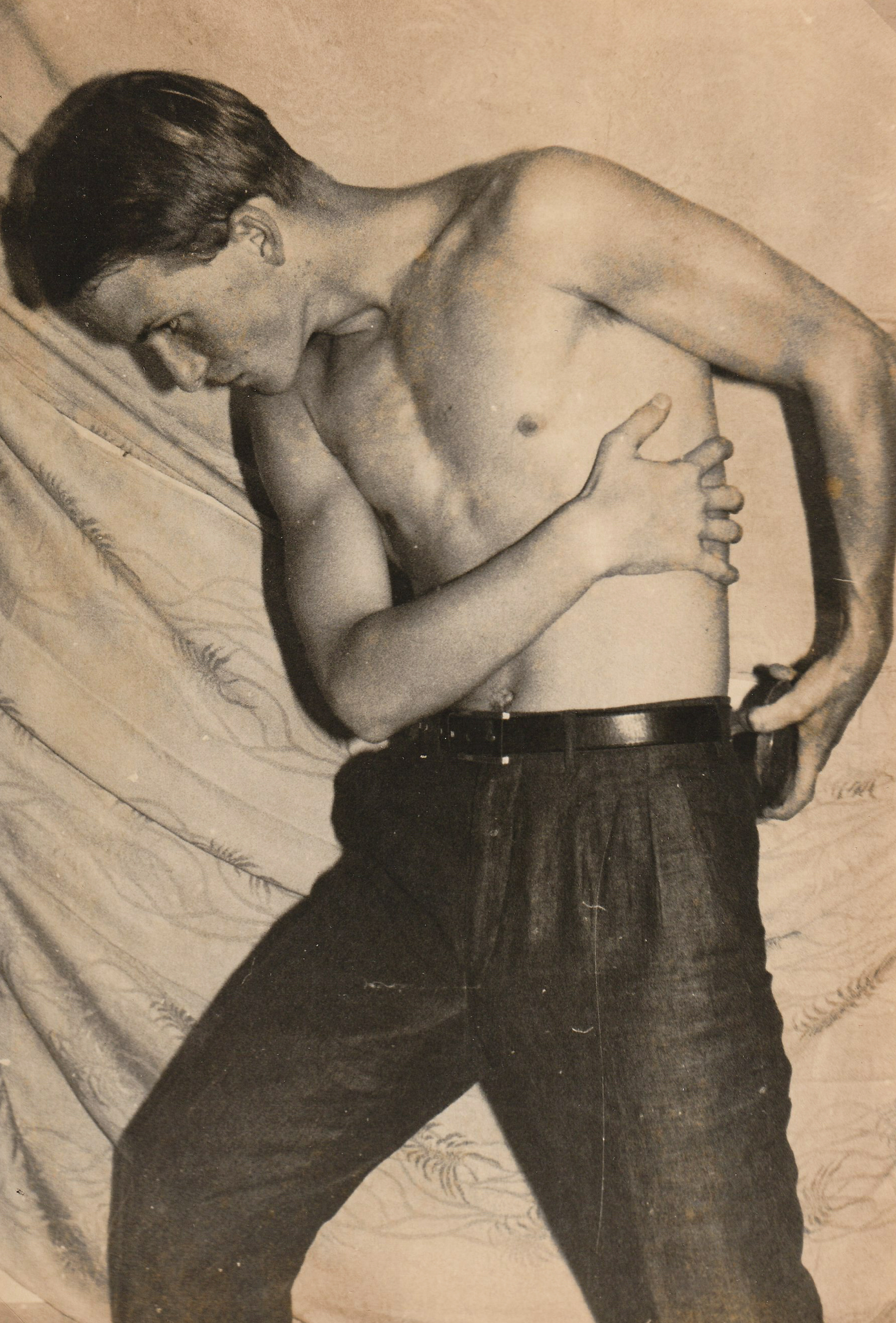
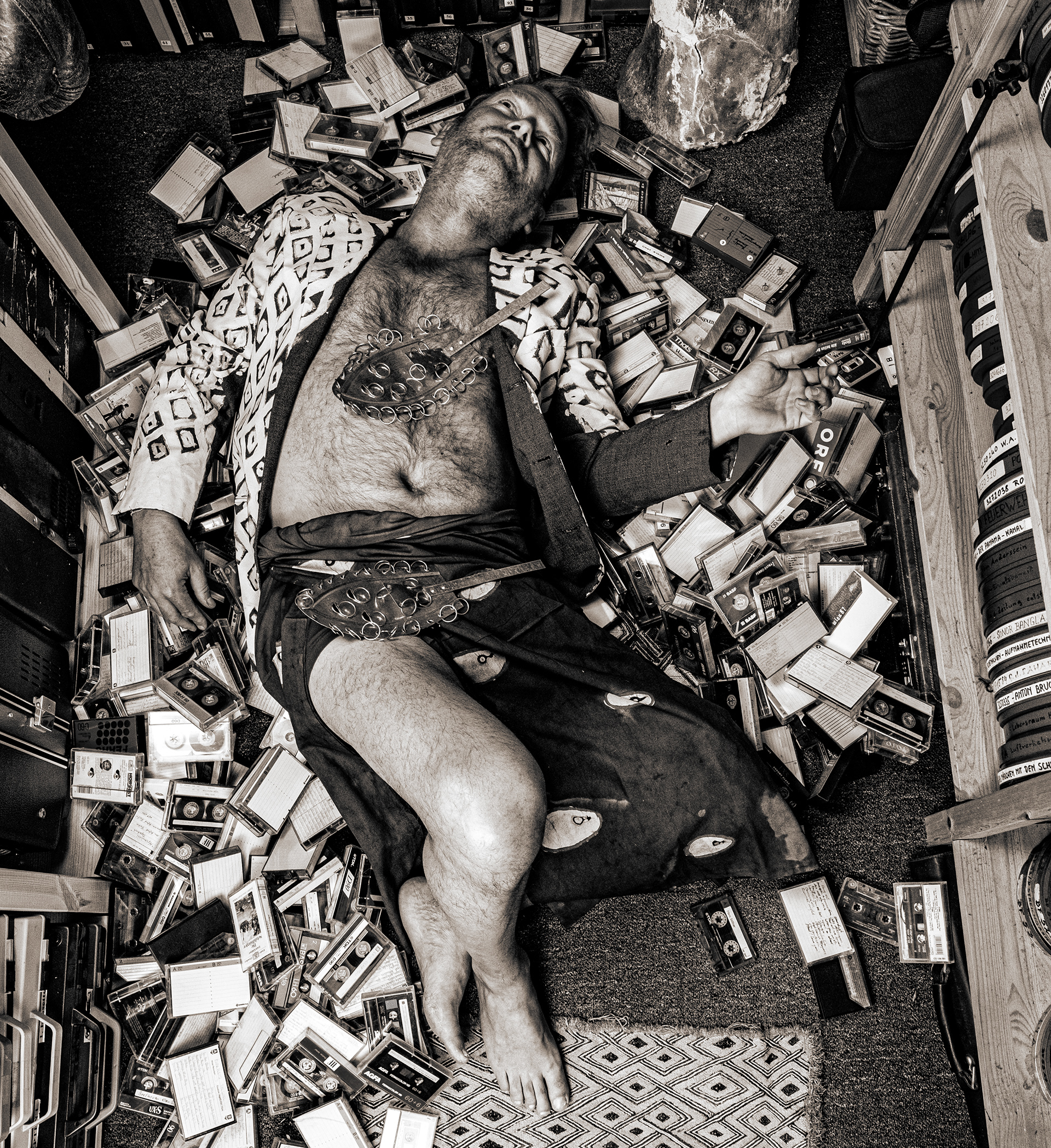
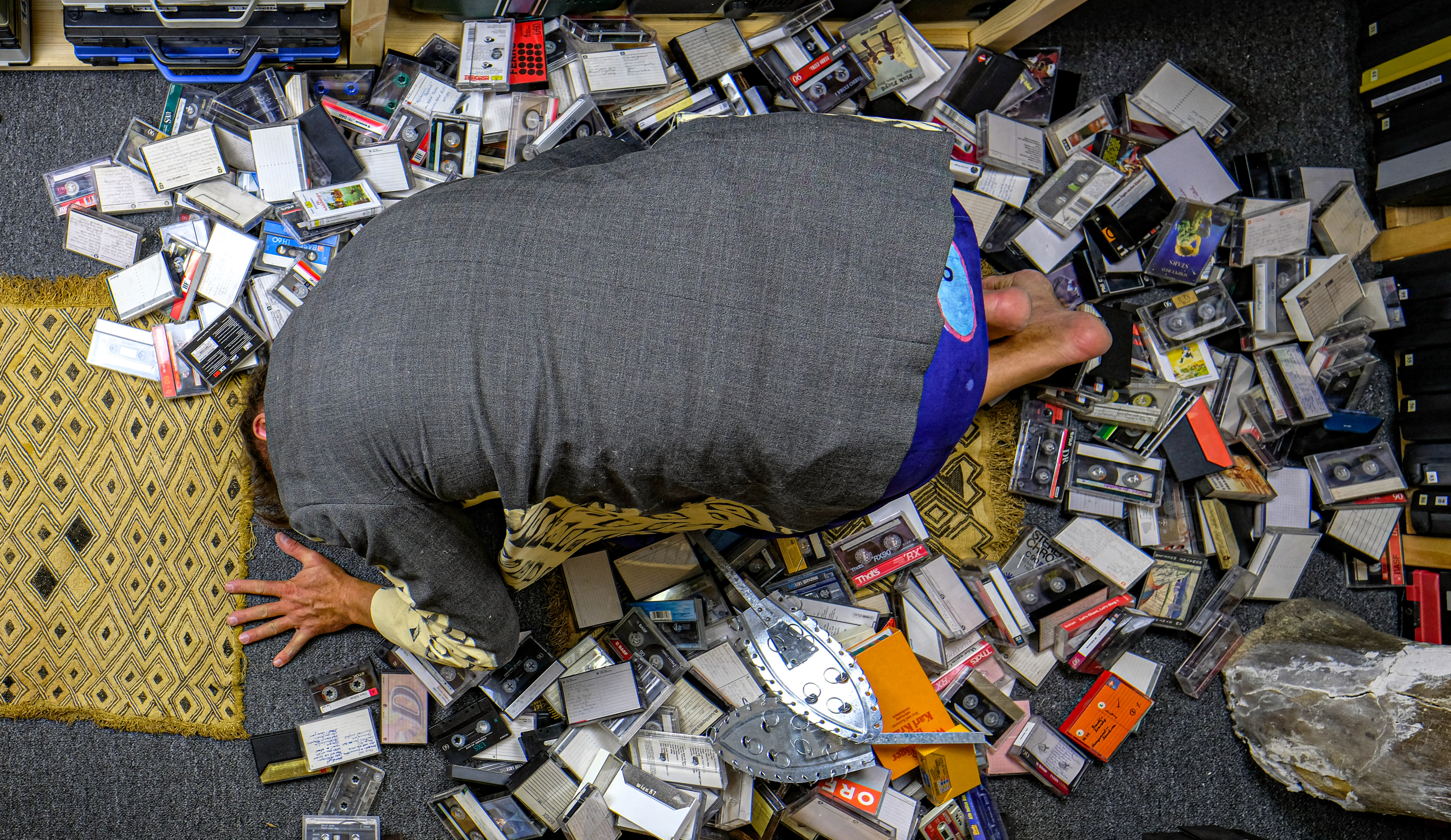
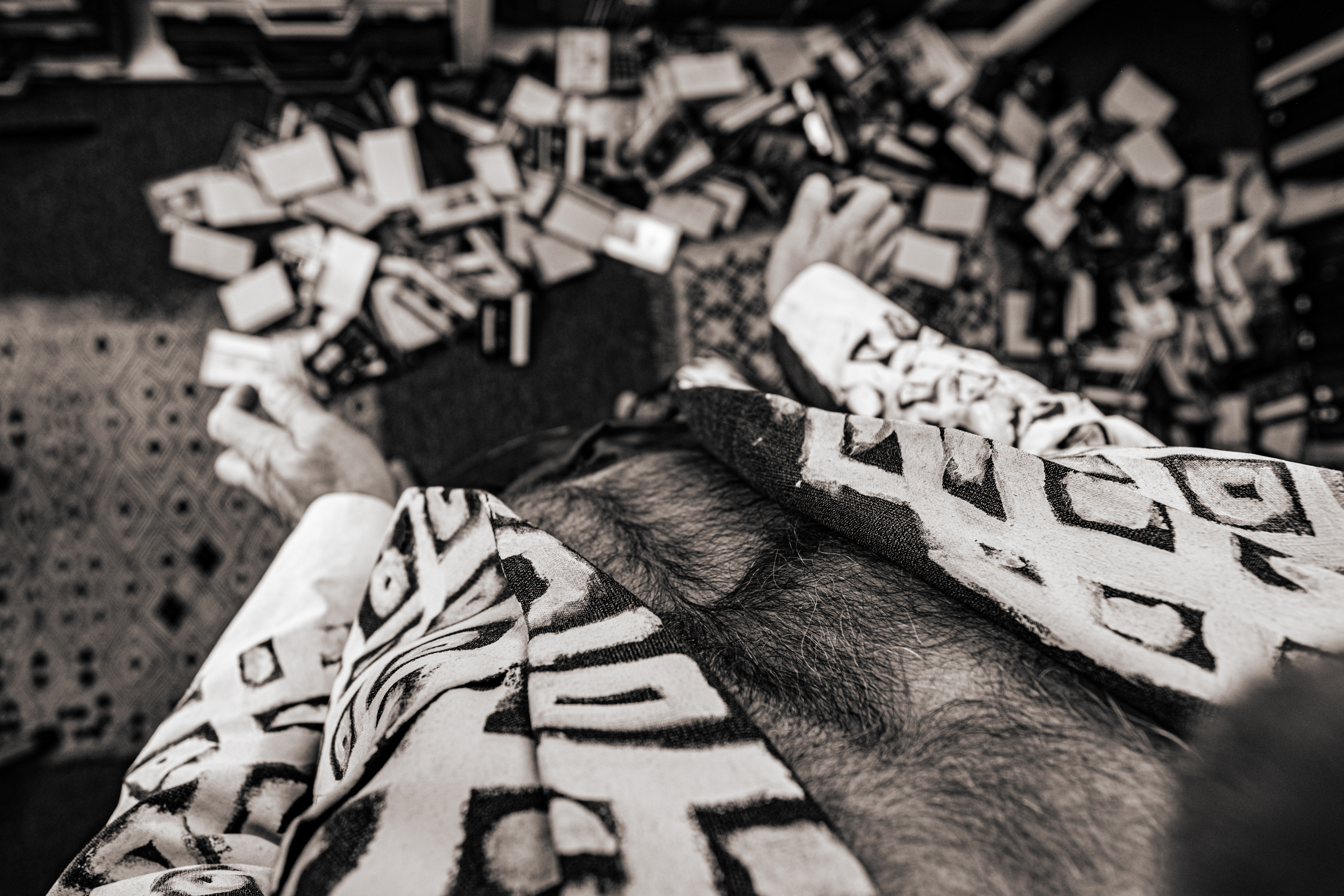
Some Disordered Interior Geometries A blur in front of a bookshelf—body dissolved, thought embodied. You disappear to be seen, like Francesca once did: in rooms where ghosts press against the glass of memory, where the body is not a self but an aperture. A man lies curled beside a chessboard—half game, half dream. His hand moves, or remembers moving. The rules are known, the reason forgotten. She holds a photograph. She lies down with it. The image becomes her relic, the portrait within the portrait, a daughter curled inside the folds of lineage. Hands on a glass table. Joseph Conrad’s Heart of Darkness. Reflection and shadow—what is seen is never all. Outside: a body leans into corn. Into river. Into horizon. He bends not to yield, but to enter. To find where the edge blurs, where flesh is field. At the beach, he writes, digs, stages himself. The absurdity of gesture becomes ritual. A spade. A chair. A hole. In the end: he lies again, surrounded by tapes—memory as clutter, archive as avalanche. Like Francesca, he asks— not who am I? but where am I when I vanish?